UL 9540 & IEC 62619 TECHNICAL COMPLIANCE REGISTER: NORTH AMERICAN BESS SAFETY STANDARD DECLARATION
EXECUTIVE SUMMARY
This document serves as the official Original Equipment Manufacturer (OEM) declaration of compliance for the North American Battery Energy Storage System (BESS) platform. Engineered to meet the most rigorous safety and performance standards in the global energy storage industry, this commercial and industrial (C&I) solution is specifically designed to satisfy the requirements of UL 9540, UL 9540A, UL 1973, IEC 62619, and NFPA 855. As the deployment of MWh-scale storage assets accelerates across the United States and Canada, regulatory scrutiny regarding fire safety, cell-level thermal stability, and system-level integration has intensified. This technical register provides a comprehensive overview of the hardware, software, and structural engineering measures implemented to achieve full compliance, ensuring that facility managers, EPCs, and authorities having jurisdiction (AHJs) can deploy this platform with absolute confidence. The system integrates Tier-1 Lithium Iron Phosphate (LFP) chemistry with a multi-level battery management system (BMS) and an advanced liquid cooling architecture to deliver unparalleled safety, longevity, and operational reliability.
SYSTEM ARCHITECTURE & SAFETY
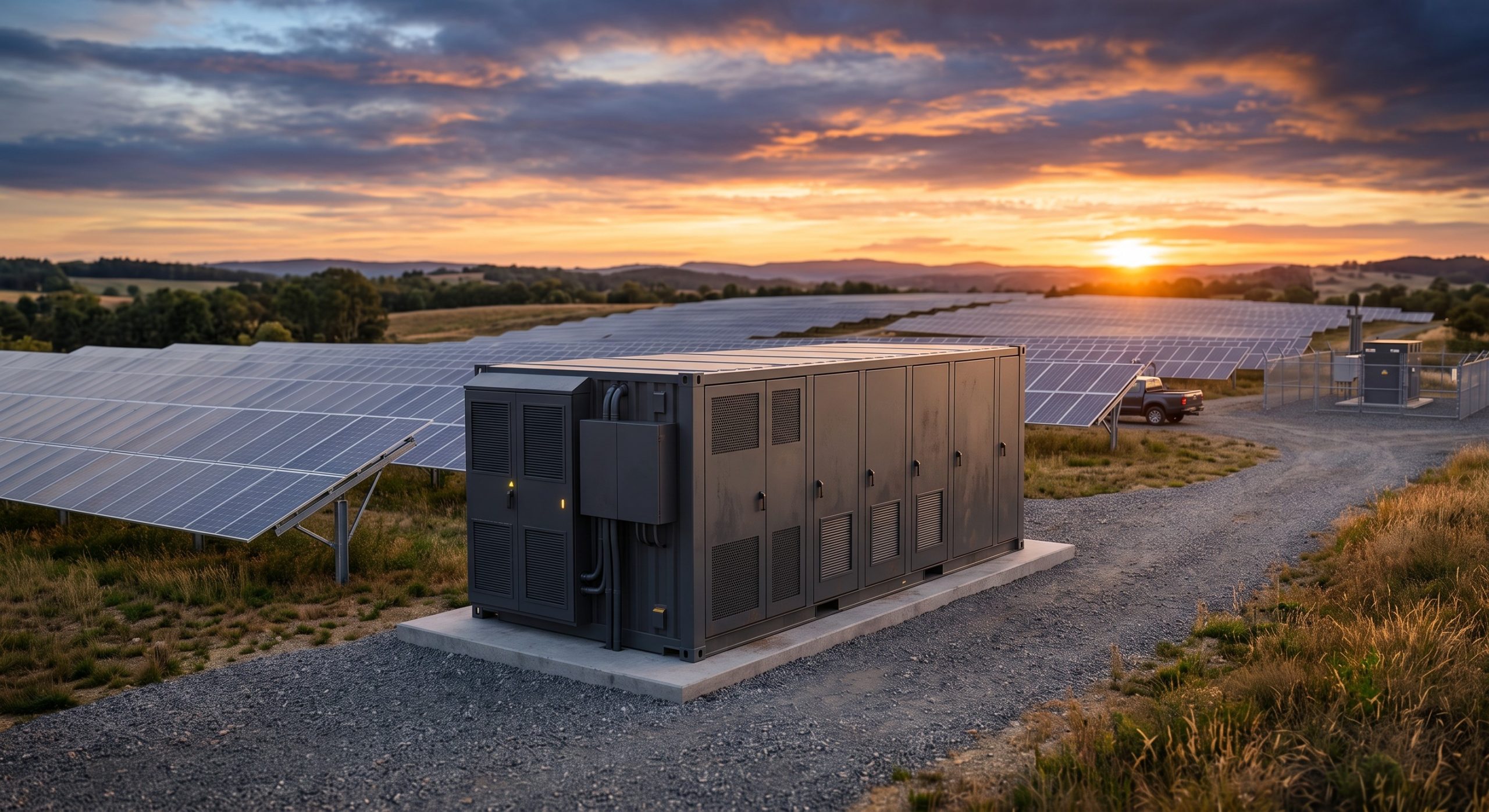
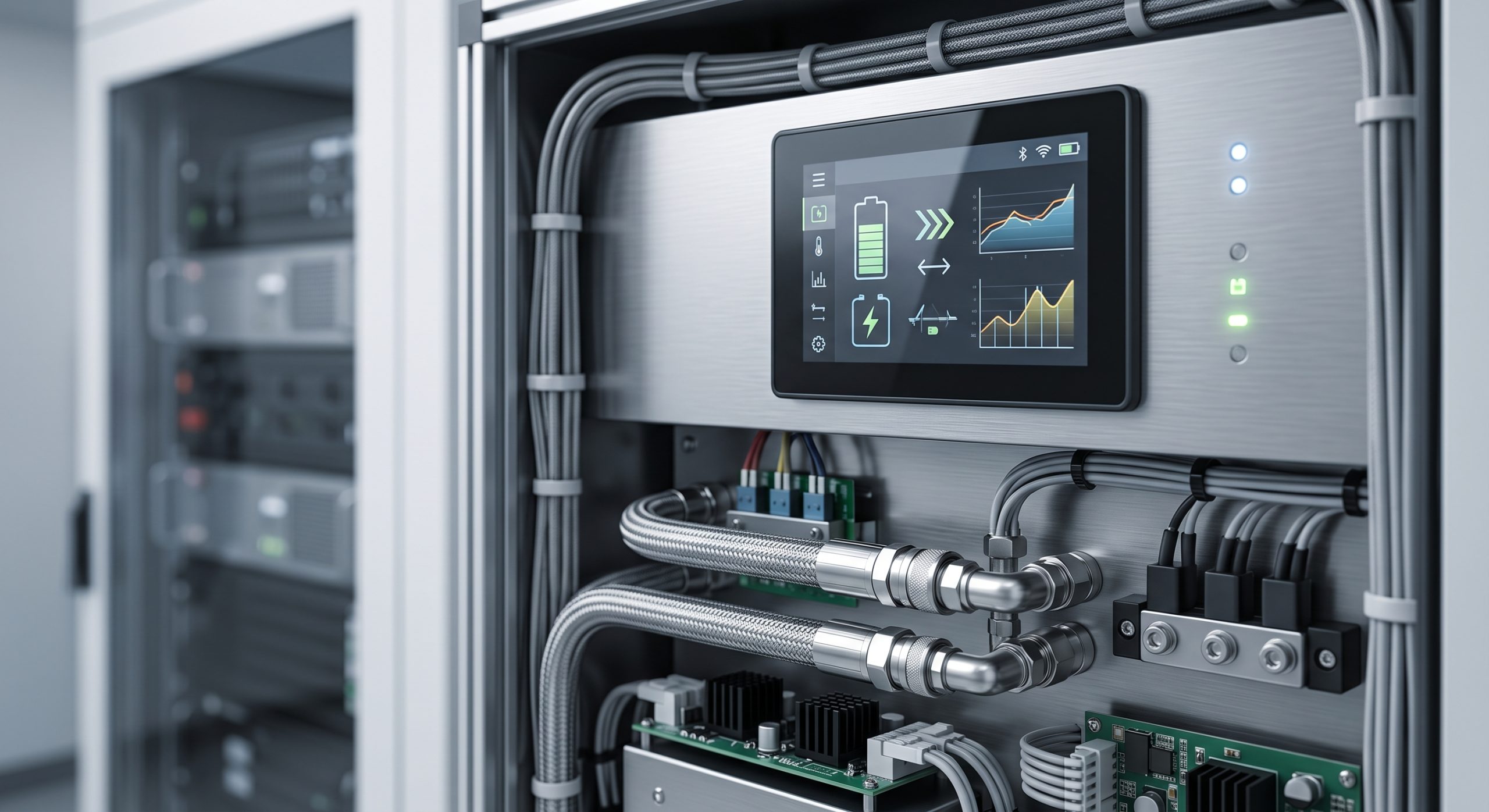
The core of the North American BESS safety declaration lies in a defense-in-depth architectural philosophy. The system is housed in a robust, weather-resistant enclosure that segregates high-voltage DC components from thermal management and control subsystems. At the heart of the platform is the Tier-1 LFP cell, selected for its superior thermal runaway onset temperature compared to Nickel Manganese Cobalt (NMC) chemistries. These cells are assembled into modules that feature integrated cell-level fusing and voltage sensing. The modules are then stacked into rack assemblies equipped with dedicated aerosol fire suppression ports and gas exhaust channels. The Battery Management System (BMS) operates on a three-tier hierarchy: Cell Monitoring Unit (CMU), Module Management Unit (MMU), and System Management Unit (SMU). This architecture provides continuous active balancing and real-time state-of-charge (SOC) and state-of-health (SOH) estimation. Crucially, the BMS is programmed with multiple redundant safety thresholds that trigger protective actions—from derating power to initiating a controlled shutdown—before any hazardous condition can escalate. The system also features an independent, mechanical pressure relief valve and an emergency stop (EPO) circuit that isolates the DC busbar in the event of an external fault.
KEY FEATURES
– UL 9540A Verified Thermal Runaway Mitigation: The system has undergone full-scale fire propagation testing per UL 9540A, demonstrating that a thermal runaway event in a single cell does not propagate to adjacent modules or cabinets, thereby preventing catastrophic facility fires.
– Smart Liquid Cooling System: An intelligent, variable-speed liquid cooling loop maintains cell temperatures within a narrow band of +/- 3 degrees Celsius, significantly reducing thermal stress and extending calendar life to over 15 years.
– Multi-Level Fire Suppression: The enclosure includes a dual-stage suppression system combining clean agent (e.g., Novec 1230) for incipient fires and water-based deluge connections for external firefighter intervention.
– Comprehensive BMS with Active Equalization: The BMS actively balances cell voltages during both charging and discharging, preventing imbalance-induced capacity loss and ensuring maximum available energy throughout the system’s life.
– Seismic and Structural Integrity: The cabinet and rack structures are engineered to meet IBC and CBC seismic requirements, with certified anchorage points for installation in high-risk zones.
– Cyber-Secure EMS: The Energy Management System (EMS) complies with IEC 62443 cybersecurity standards, featuring encrypted communications, role-based access control, and secure remote firmware update capabilities.
COMPLIANCE & STANDARDS
This North American BESS platform is declared compliant with the following primary standards and directives. UL 9540: Standard for Energy Storage Systems and Equipment. This certification covers the complete system, including the battery modules, PCS, and controls, ensuring they function safely as an integrated unit. UL 9540A: Test Method for Evaluating Thermal Runaway Fire Propagation in Battery Energy Storage Systems. The system passed the cell, module, unit, and installation-level tests, confirming no fire propagation beyond the initiating unit. UL 1973: Standard for Batteries for Use in Stationary, Vehicle Auxiliary Power, and Light Electric Rail Applications. This covers the battery modules and packs themselves. IEC 62619: Secondary cells and batteries containing alkaline or other non-acid electrolytes – Safety requirements for secondary lithium cells and batteries, for use in industrial applications. NFPA 855: Standard for the Installation of Stationary Energy Storage Systems. The system design and layout guidelines provided in this document are fully compliant with NFPA 855 separation and clearance requirements. Additional compliance includes IEEE 1547 for grid interconnection, UL 1741 SA for inverters, and CSA C22.2 No. 107.1 for Canada. The system also holds CE and IEC 62477 certifications for global deployment flexibility.
TECHNICAL SPECIFICATIONS
The following parameters represent the standard commercial configuration. Please note that specifications may vary slightly based on final project-specific configurations and grid codes.
| Parameter | Specification |
|---|---|
| Nominal Capacity | 215 kWh / 372 kWh per cabinet |
| Cooling Method | Smart Liquid Cooling (Variable Speed) |
| Cell Chemistry | Tier-1 LFP (Lithium Iron Phosphate) |
| Fire Suppression | Dual-Stage: Clean Agent + Water Deluge Connection |
| Compliance | UL 9540, UL 9540A, UL 1973, IEC 62619, NFPA 855 |
| Enclosure Rating | NEMA 3R / IP54 |
| Operating Temperature | -30°C to +50°C (with HVAC) |
| BMS Communication | Modbus TCP/IP, DNP3, OpenADR 2.0b |
| Cycle Life | > 8,000 Cycles @ 80% DoD, 25°C |
| Warranty | 10 Years Standard (Extendable to 15 Years) |
INDUSTRIAL DEPLOYMENT
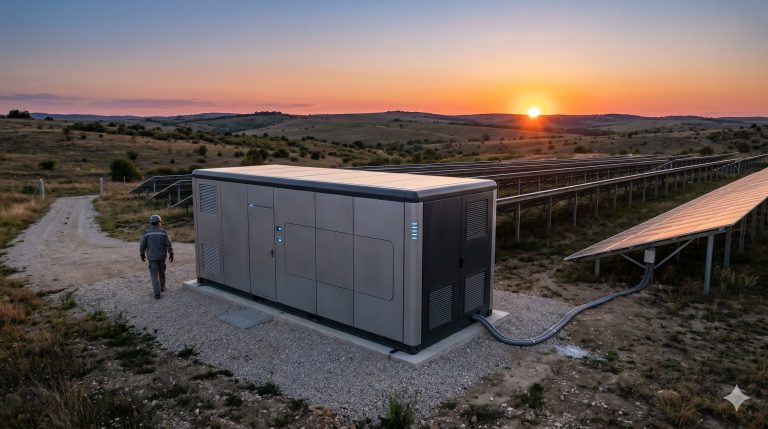
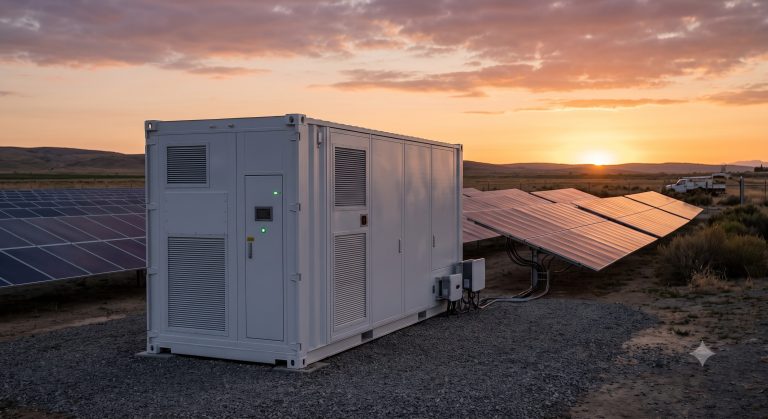
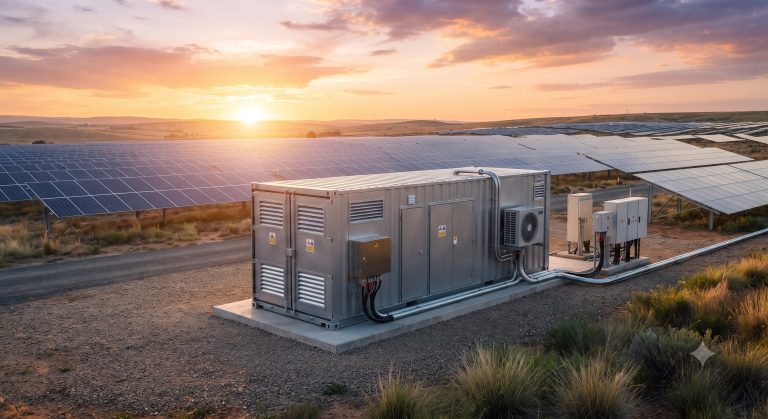
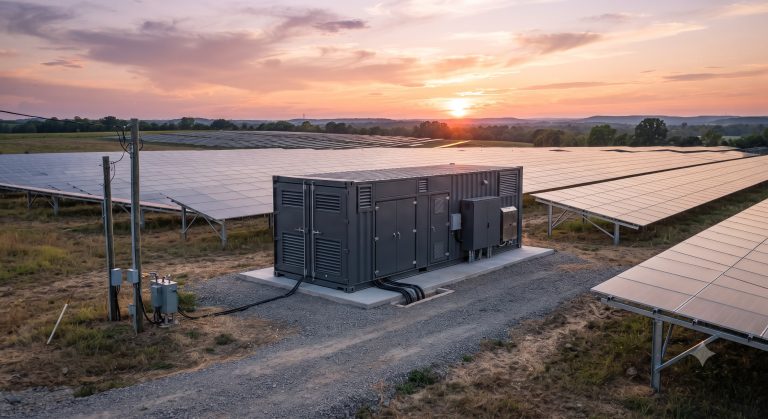
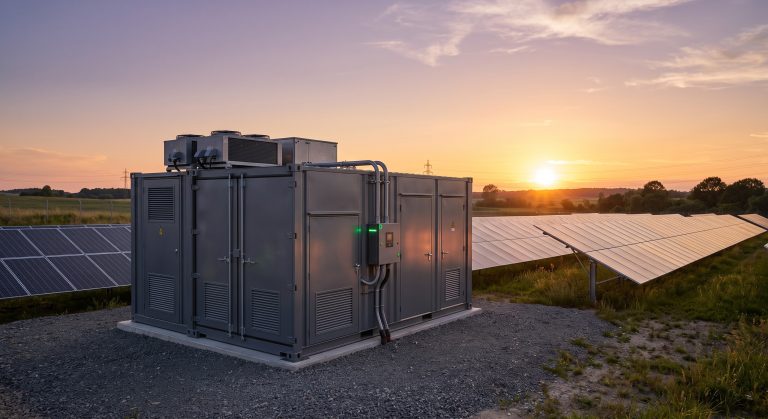
Deploying this BESS in North American industrial and commercial environments requires strict adherence to local fire codes and AHJ requirements. The system is designed for outdoor pad-mounted installation, with a minimum clearance of 10 feet (3 meters) from property lines, combustible materials, and occupied buildings, as per NFPA 855. The enclosure is rated NEMA 3R (or IP54) for protection against rain, snow, and dust. For cold climate deployment, an integrated HVAC system with resistive heating ensures the battery operates within its optimal temperature range, even at -30 degrees Celsius ambient. The system’s modular design allows for parallel expansion, enabling facilities to scale from 215 kWh to multi-MWh capacities using the same certified hardware and control logic. The EMS provides seamless integration with existing facility SCADA systems via Modbus TCP/IP, DNP3, and OpenADR 2.0b, enabling advanced demand response and peak shaving strategies.
📥 Download Technical Specification
Click the button below to view or download the full official PDF datasheet.