Introduction: The Compliance Mandate Driving C&I Energy Storage
For multinational corporations and heavy industrial facilities, ESG compliance has transitioned from a voluntary pledge to a board-level fiduciary duty. Yet, achieving verifiable Scope 2 and Scope 3 emissions reductions while maintaining operational uptime presents a significant engineering challenge. This is where Battery Energy Storage Systems (BESS) function as the critical hardware bridge between sustainability goals and financial performance. As of 2026, over 60% of Fortune 500 companies have mandated specific emission reduction targets for their supply chains, driving a surge in demand for certified, code-compliant storage solutions. However, the deployment of a commercial & industrial (C&I) BESS is fraught with complex regulatory landscapes, requiring strict adherence to UL 9540, IEC 62619, and UN38.3 standards to mitigate risk and secure insurance approval. This masterclass provides a deep-dive into the engineering specifications, fire safety protocols, and testing regimes that define a truly bankable BESS designed for rigorous ESG compliance.
Core Safety Architecture: Beyond Thermal Runaway Prevention
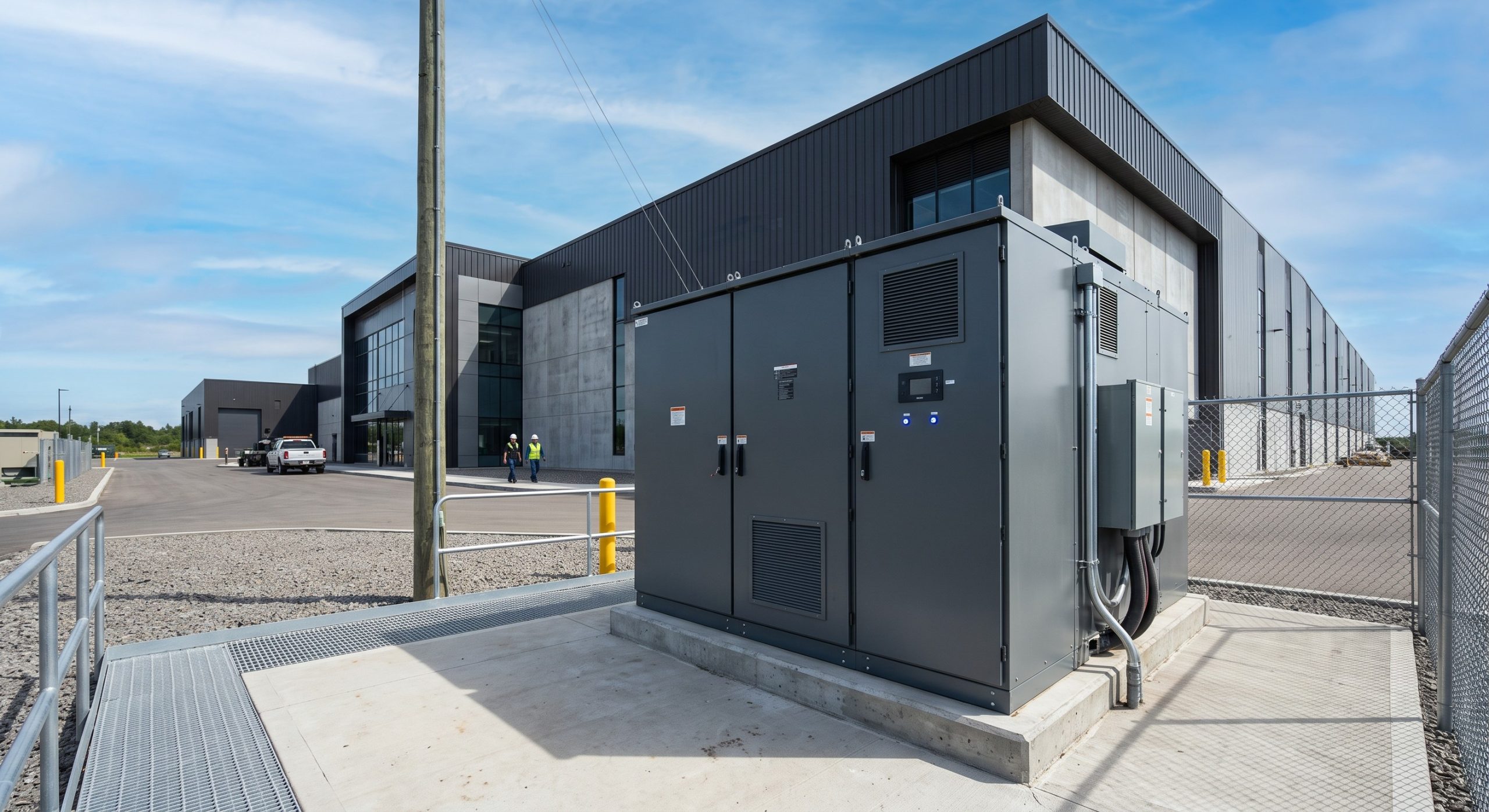
At the heart of compliant BESS engineering is a multi-layered defense strategy that encompasses the cell, module, rack, and container level. The transition to Tier-1 LFP (Lithium Iron Phosphate) chemistry has been a significant step forward due to its inherently lower exothermic reaction temperatures, yet its safety is contingent on sophisticated management systems. A robust Battery Management System (BMS) must perform cell balancing with micro-voltage precision to prevent overcharging and deep discharge, which are primary triggers for capacity fade and thermal stress. High-end systems now feature liquid cooling thermal control to maintain temperature differentials below 5°C across the entire pack, directly influencing cycle life stability. Furthermore, stringent compliance mandates require a comprehensive active fire suppression system, often integrating aerosol or gas-based extinction agents, a dual-alarm trigger mechanism, and at least 60 minutes of fire-rated enclosure integrity to allow for safe egress and emergency response.
UL 9540 & IEC 62619: Engineering Standards for Global Deployment
For a BESS to qualify for grid interconnection and corporate ESG audits, it must meet the rigorous testing protocols of UL 9540 (the standard for safety of energy storage systems and equipment), which evaluates thermal propagation and explosion prevention. Simultaneously, IEC 62619 addresses the safety requirements for secondary lithium cells and batteries used in industrial applications, focusing on mechanical shock and vibration resistance. Adherence to these standards ensures that the system is designed to withstand ground faults, overcurrent, and short-circuit events without cascading failure. The table below outlines the critical technical specifications that engineers and procurement specialists must verify to ensure compliance and long-term durability.
| Key Parameter | Technical Specification |
|---|---|
| Battery Chemistry | Tier-1 LFP (Lithium Iron Phosphate) |
| Nominal System Capacity | Up to 2 MWh (Modular Cabinet) |
| Cycle Life | >8000 cycles @ 90% DoD |
| Round-Trip Efficiency | >92% (including auxiliary loads) |
| Thermal Management | Liquid Cooling (Temperature Δ <5°C) |
| Safety Certifications | UL 9540, IEC 62619, UN38.3, CE |
| PCS Topology | Bi-directional, 1500V DC Link |
| Communication Protocol | Modbus TCP/IP, IEC 61850 |
| Fire Suppression | Aerosol / NOVEC 1230 (Dual-Trigger) |
| IP Rating | IP 55 (Outdoor Installation) |
PCS Bi-Directional Conversion and Grid Code Compliance
While battery chemistry and BMS ensure internal stability, the Power Conversion System (PCS) acts as the interface with the utility grid and on-site loads. For BESS integration to support demand response and grid support functions, the PCS must feature rapid bidirectional response times of less than 200 milliseconds. This ensures the system can inject reactive power to stabilize voltage sag or absorb excess capacity during frequency fluctuations, aligning with utility grid code requirements. Modern PCS solutions also incorporate anti-islanding protection, which is mandatory under UL 1741, safeguarding maintenance workers and utility infrastructure during grid outages.
Commercial ROI: Quantifying the ESG Investment
In the B2B landscape, ESG compliance is increasingly tied to access to green financing, with lenders offering favorable interest rates on projects that meet specific energy efficiency benchmarks. The economic calculation for a BESS extends beyond simple peak-shaving ROI. The system architecture must account for a round-trip efficiency exceeding 92% to ensure maximum energy arbitrage value, particularly for facilities in regions with time-of-use (TOU) pricing. When performing the Total Cost of Ownership (TCO) analysis, the integration of advanced Energy Management Systems (EMS) is crucial. The EMS uses machine learning algorithms to forecast load curves and battery state-of-health, dynamically adjusting dispatch cycles to maximize the system’s lifespan. Standard warranties now cover 80% capacity retention up to 8000 cycles at 90% DoD, which translates to over 15 years of operational life in typical C&I applications, significantly amortizing the capital expense over the long term.
Deployment Scenarios: From Micro-Grids to Industrial Parks
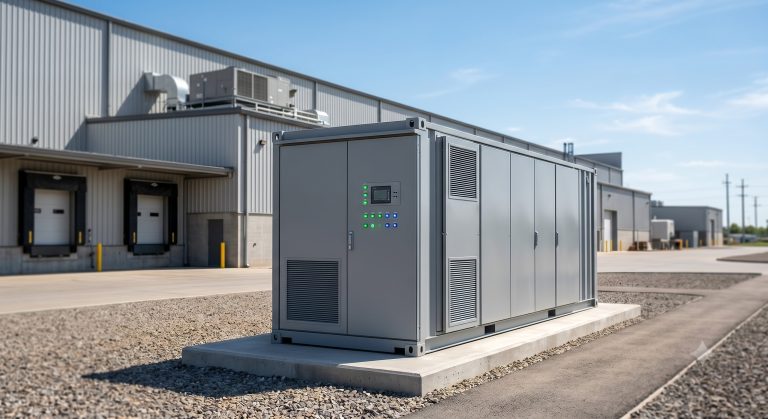
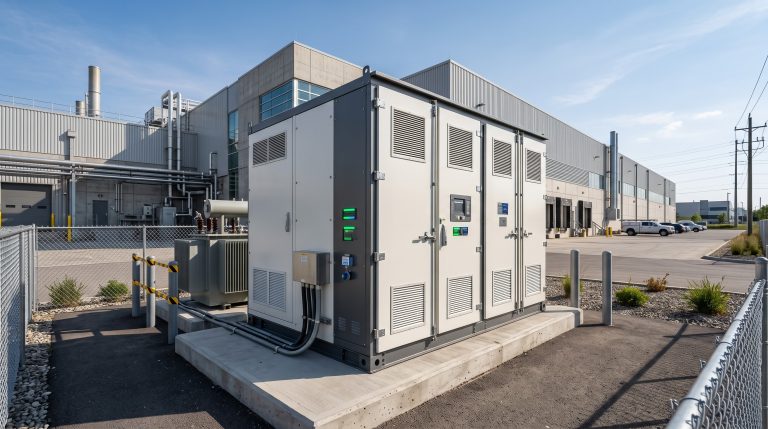
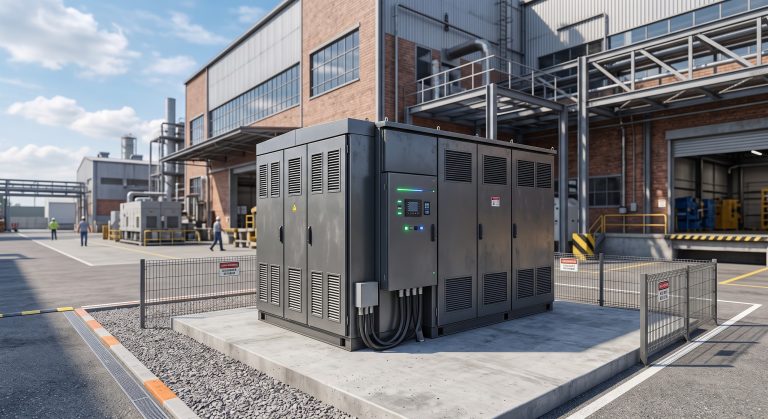
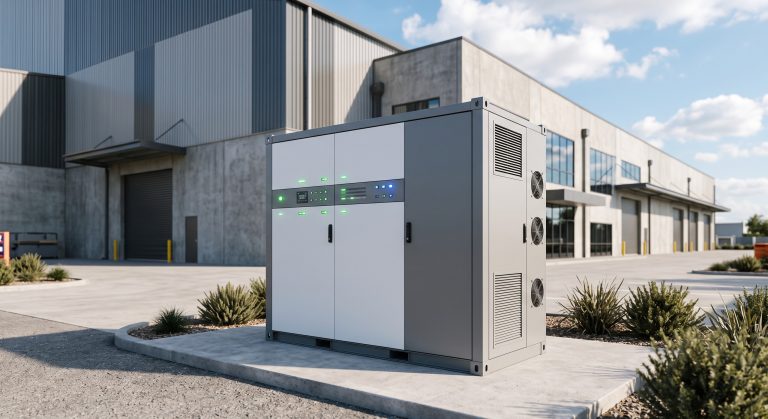
The architecture of a compliant BESS must be adaptable to various physical constraints and application needs. For industrial parks with expansive rooftop solar arrays, the BESS supports PV-storage-charging synergy, enabling facilities to shift up to 75% of their peak load to off-peak hours. For EV supercharging stations, a high-capacity BESS acts as a buffer to avoid demand charges, allowing ultra-fast chargers to operate without costly grid upgrades. In high-density urban data centers, space is at a premium; hence, modular high-density cabinets with liquid cooling are essential to maintain performance in constrained environments. The integration of SCADA-ready communication protocols (Modbus TCP/IP, IEC 61850) ensures that the system is VPP ready, enabling aggregation with other distributed energy resources to participate in frequency regulation markets and create an additional revenue stream. Such deployments not only reduce the carbon footprint but also enhance facility resilience against grid instability.

Conclusion: Architecting for the Future of Clean Energy Procurement
Selecting a BESS for ESG compliance is a strategic decision that involves evaluating safety, durability, and interoperability. A system built to UL 9540 and IEC 62619 standards, featuring advanced liquid cooling and a robust BMS, ensures that the asset performs reliably while mitigating environmental and financial liabilities. By quantifying the TCO and focusing on round-trip efficiency, procurement teams can justify the investment through clear emissions reductions and operational savings. As regulatory frameworks continue to tighten, the BESS is no longer a peripheral sustainability tool but a core infrastructure component for the modern, decarbonized commercial facility.