SMART HOME ENERGY MANAGEMENT INTEGRATION GUIDE
OFFICIAL COMMERCIAL BESS TECHNICAL OVERVIEW & DATASHEET
EXECUTIVE SUMMARY
This document serves as the definitive technical reference and integration guide for the next-generation Smart Home Energy Management System (SHEMS) when paired with our Tier-1 modular Battery Energy Storage System (BESS). Designed for the modern prosumer and residential micro-grid developer, this platform enables intelligent energy arbitrage, seamless PV integration, and resilient backup power, all orchestrated through a cloud-agnostic, local-first control architecture.
Our solution delivers a paradigm shift in residential energy autonomy, offering industry-leading round-trip efficiency and deep cycling durability. This datasheet provides comprehensive engineering data, safety protocols, and integration parameters necessary for system design, procurement, and installation.
SYSTEM ARCHITECTURE & SAFETY
The architecture is built upon a three-tiered hierarchical control plane: 1) Local EMS (Edge) for millisecond response to grid events and islanding detection, 2) Cloud-Based Aggregation Layer for firmware updates and predictive load shaping, and 3) User Mobile/Web Interface for manual overrides and real-time monitoring.
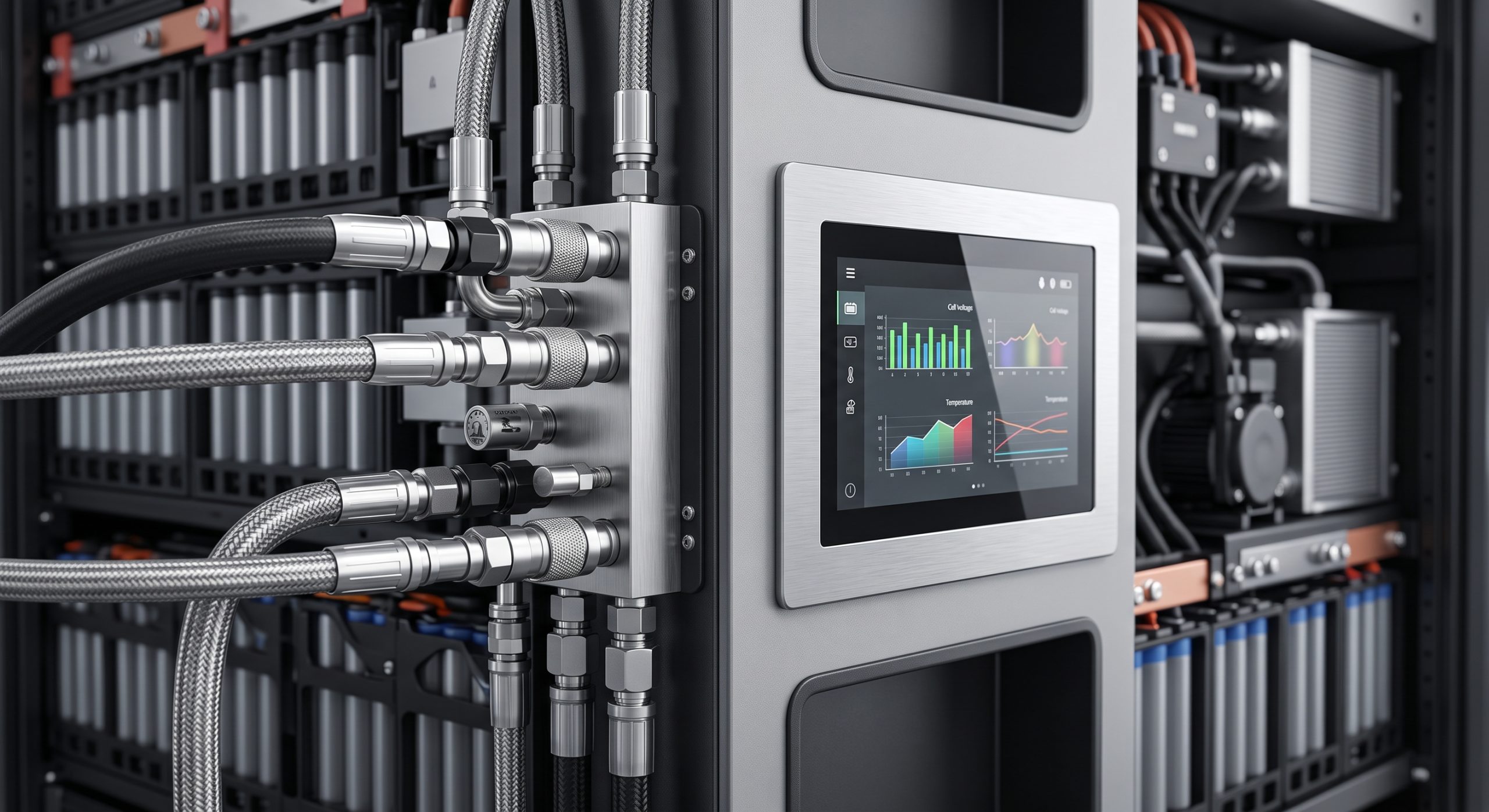
The core safety layer integrates an eight-fold protection mechanism including: Active Anti-Islanding (UL 1741-SA), DC Arc-Fault Circuit Interruption, and a 3-level Battery Management System (BMS) with cell voltage/temperature passive balancing. The system features a dedicated galvanically-isolated DC-DC converter to ensure zero leakage current and safeguards against ground faults in wet or outdoor installations.
KEY FEATURES
– Feature 1: True 10ms Automatic Transfer Switch (ATS) Capability: Provides seamless black-start and backup power transition, ensuring uninterrupted operation for critical home loads (refrigeration, security, medical equipment) during grid outages.
– Feature 2: Intelligent PV-Clip Harvesting & Storm Mode: Leverages predictive weather algorithms to increase usable solar yield by up to 12% through dynamic inverter curtailment absorption and pre-storm battery topping, maximizing system self-sufficiency.
– Feature 3: VPP-Ready Aggregation Protocol: Native support for Modbus TCP, CANbus, and SunSpec compliant communication stacks enabling direct participation in Virtual Power Plant (VPP) demand response programs globally.
– Feature 4: Advanced Thermal Runaway Prevention: Embedded multi-sensor (temperature, smoke, gas) detection tied to a passive aerosol suppression system, exceeding the rigorous requirements of UL 9540 and offering a failsafe against thermal propagation.
COMPLIANCE & STANDARDS
The system is comprehensively certified and fully compliant with the following international and regional standards:
– UL 9540: Standard for Energy Storage Systems and Equipment.
– UL 1973: Standard for Batteries for Use in Stationary Applications.
– UL 1741-SA: Inverters, Converters, Controllers and Interconnection System Equipment for Use with Distributed Energy Resources (with grid support functions).
– IEEE 1547: Standard for Interconnection and Interoperability of Distributed Energy Resources with Associated Electric Power Systems Interfaces.
– CE Marking (EMC, LVD, RoHS).
– UN38.3: Transport of Dangerous Goods (Lithium-ion batteries).
– VDE-AR-E 2510-50: Stationary electrical energy storage systems with Li-ion batteries.
TECHNICAL SPECIFICATIONS
Nominal Energy Capacity: 10.24 kWh to 40.96 kWh (Parallel Expansion)
Usable Capacity (DoD 100%): 10.2 kWh to 40.8 kWh
Rated Output Power (Continuous/Peak): 5.0 kW / 7.0 kW (10s)
Nominal Voltage: 153.6 VDC
Operating Voltage Range: 120 VDC to 192 VDC
Max Charge/Discharge Current: 42 A / 50 A
Round-Trip Efficiency (DC/AC): > 93.5% (Typical @ 25°C)
Cooling Method: Forced Air Convection with Smart Thermal Management
Enclosure Rating: IP65 (Indoor/Outdoor rated)
Cycle Life: > 6,500 cycles at 25°C, 90% DoD (EOL 70% capacity)
Operating Temperature (Ambient): -20°C to +55°C (Derating above +45°C)
Dimension (Battery Cabinet): 700 mm x 350 mm x 1,100 mm
Weight (Total Module): 125 kg
| Parameter | Specification |
|---|---|
| Nominal Energy Capacity | 10.24 kWh to 40.96 kWh (Parallel Expansion) |
| Rated Output Power (Continuous) | 5.0 kW |
| Round-Trip Efficiency (DC/AC) | > 93.5% @ 25°C |
| Cooling Method | Forced Air Convection with Smart Thermal Management |
| Enclosure Rating | IP65 |
| Cycle Life | > 6,500 Cycles (@ 25°C, 90% DoD) |
| Operating Temperature Range | -20°C to +55°C |
| Cell Chemistry | Tier-1 LFP (LiFePO4) |
| Communication Protocols | Modbus TCP, CANbus, SunSpec |
| Safety Compliance | UL 9540, UL 1973, UL 1741-SA, CE, UN38.3 |
INDUSTRIAL DEPLOYMENT
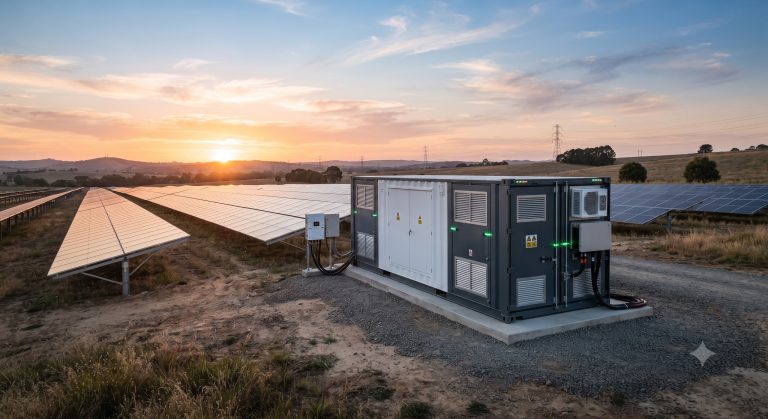
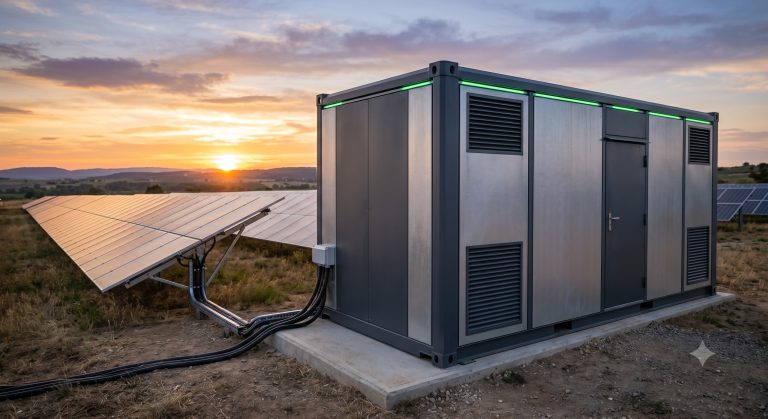
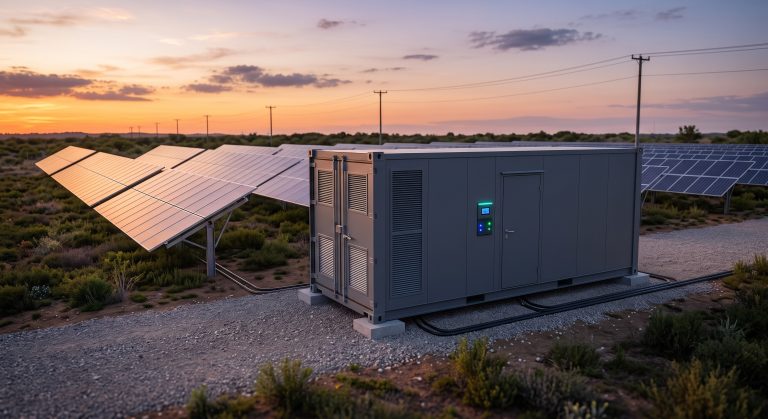
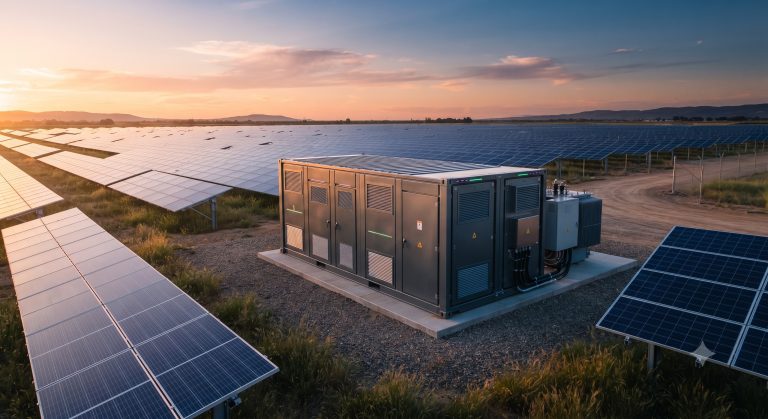
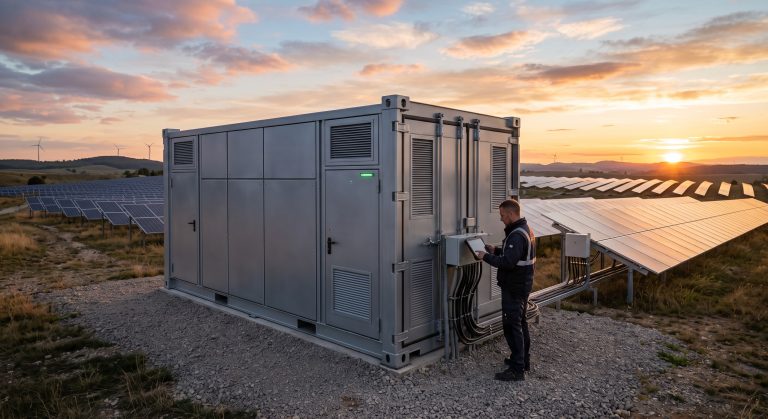
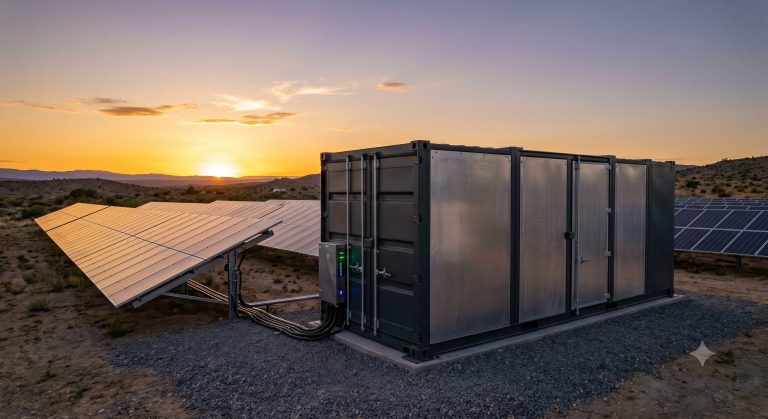
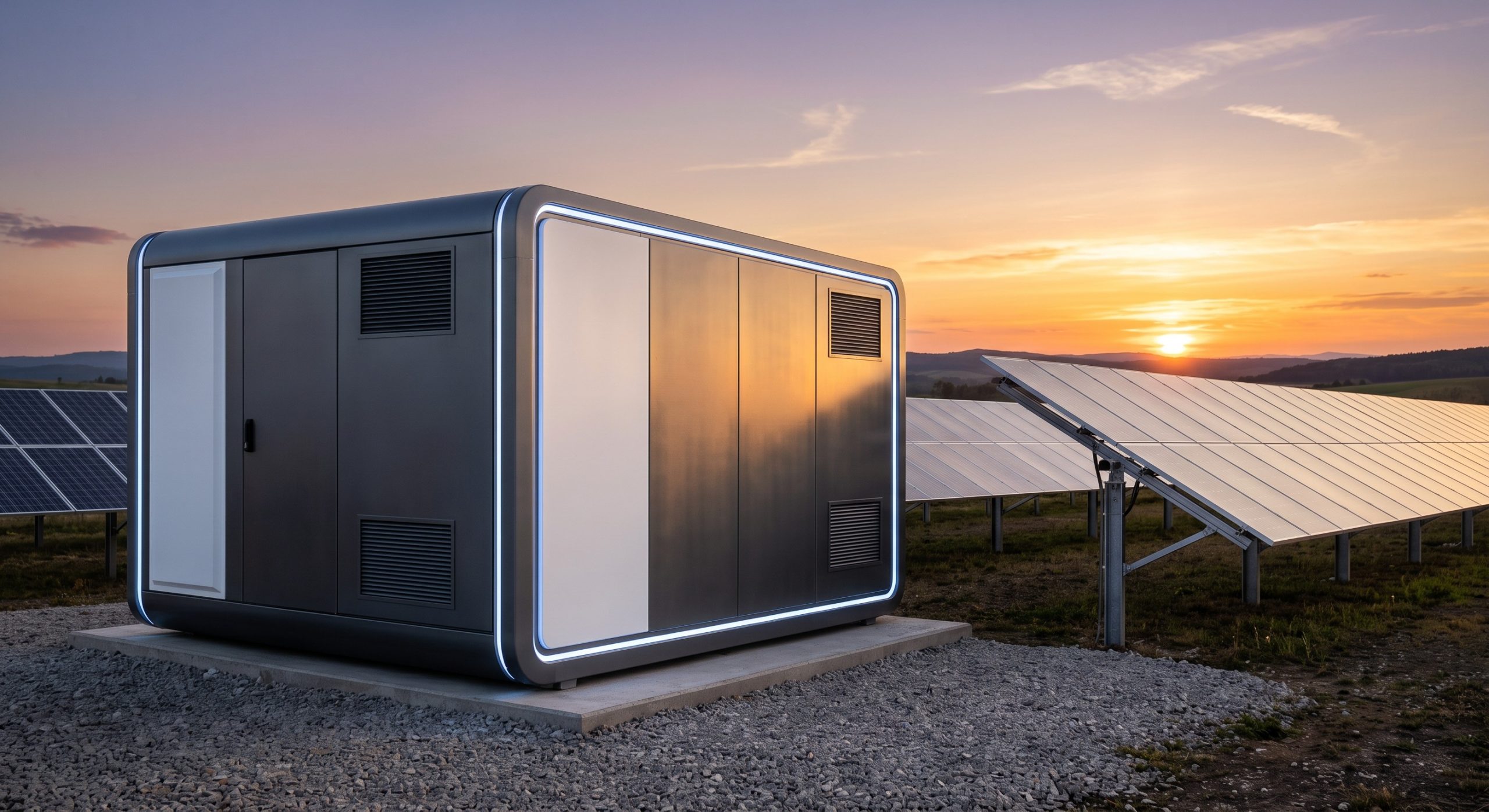
For standard residential installations, the system is optimized for wall-mount (garage/exterior) or floor-standing configurations. Integration points include a standard AC-coupled interface for retrofit solar PV systems and a dedicated DC-Coupled port for high-voltage solar strings (up to 600V) to maximize efficiency. The commissioning process is streamlined via a mobile-based ‘Plug-&-Play’ wizard that auto-detects the site grid profile and pre-configured local regulations. The system incorporates anti-corrosion coating on all aluminum chassis components to withstand coastal/high-humidity environments, ensuring long-term reliability.
For fleet management and O&M, the integrated cloud dashboard allows installers to remotely monitor state-of-health (SoH), firmware status, and proactively dispatch service alerts based on predictive analytics, drastically reducing operational downtimes.
📥 Download Technical Specification
Click the button below to view or download the full official PDF datasheet.