CARBON FOOTPRINT REDUCTION STORAGE SOLUTIONS GUIDE
OFFICIAL COMMERCIAL BESS TECHNICAL OVERVIEW & DATASHEET
EXECUTIVE SUMMARY
As global energy markets accelerate toward net-zero targets, commercial and industrial (C&I) facilities face the dual challenge of reducing operational carbon footprints while maintaining energy security and economic competitiveness. This document presents our comprehensive Battery Energy Storage System (BESS) platform, engineered specifically to enable deep decarbonization through intelligent energy arbitrage, peak shaving, and renewable integration. The system architecture combines Tier-1 Lithium Iron Phosphate (LFP) cell technology with advanced liquid thermal management and a proprietary Energy Management System (EMS), delivering a turnkey solution that reduces facility-level carbon emissions by up to 40% while improving energy cost predictability. This datasheet provides a detailed technical overview, performance specifications, and compliance information for system integrators, facility managers, and sustainability officers.
SYSTEM ARCHITECTURE & SAFETY
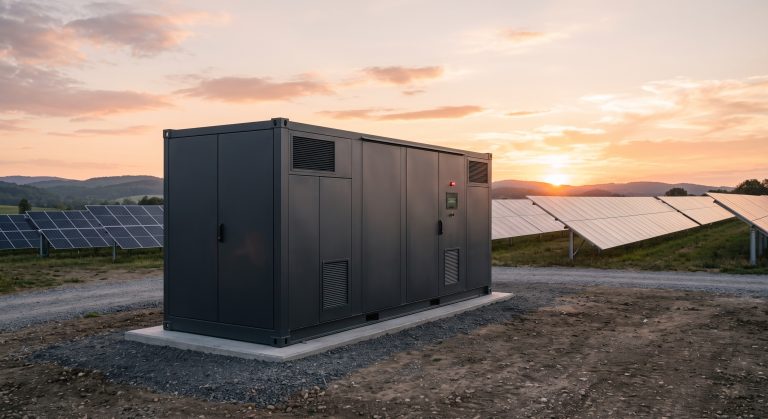
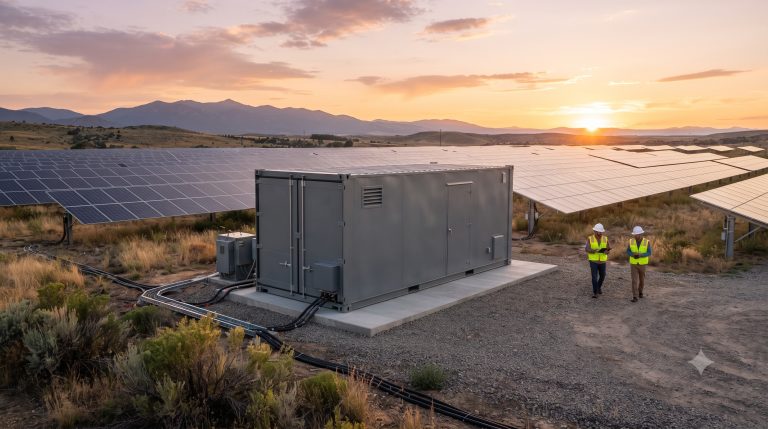
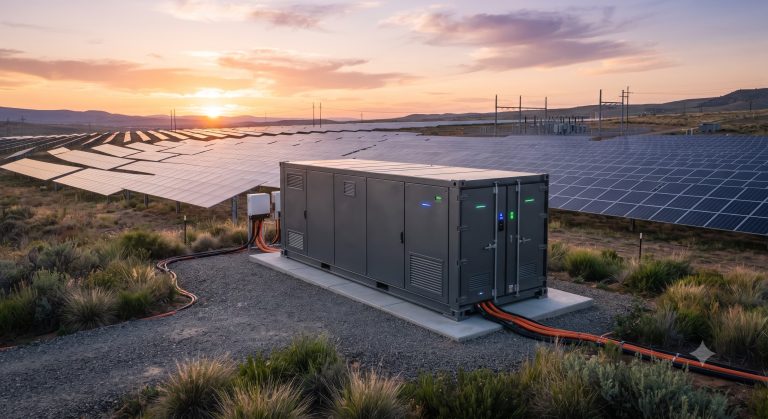
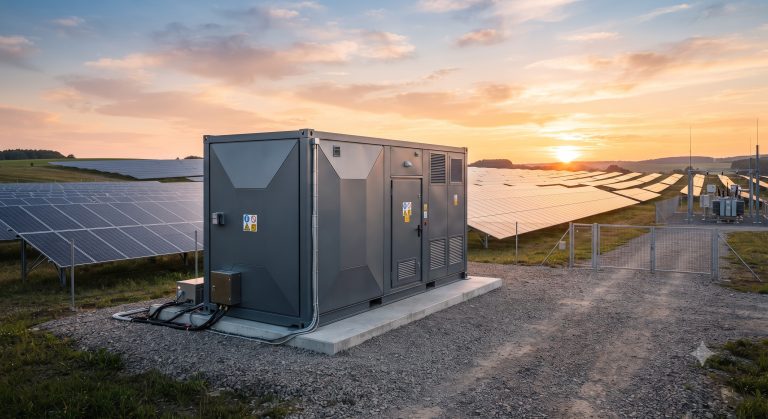
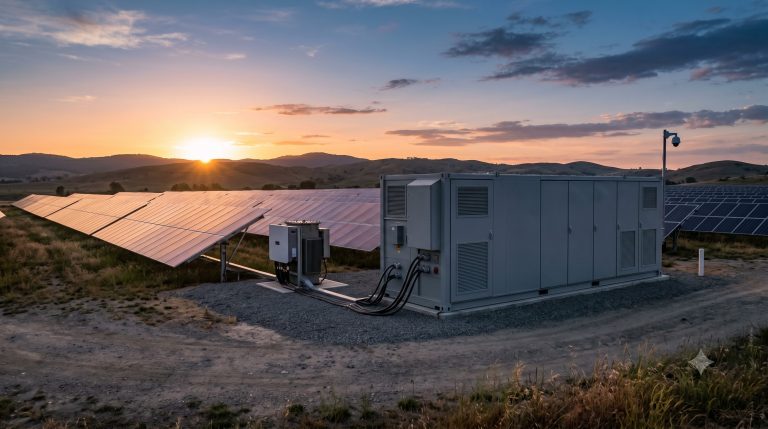
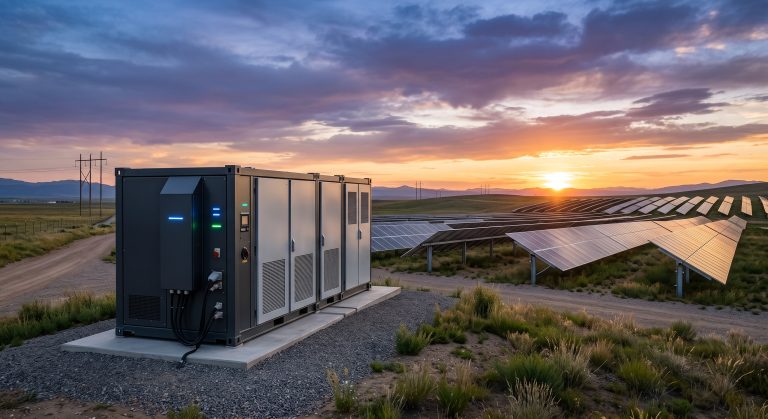
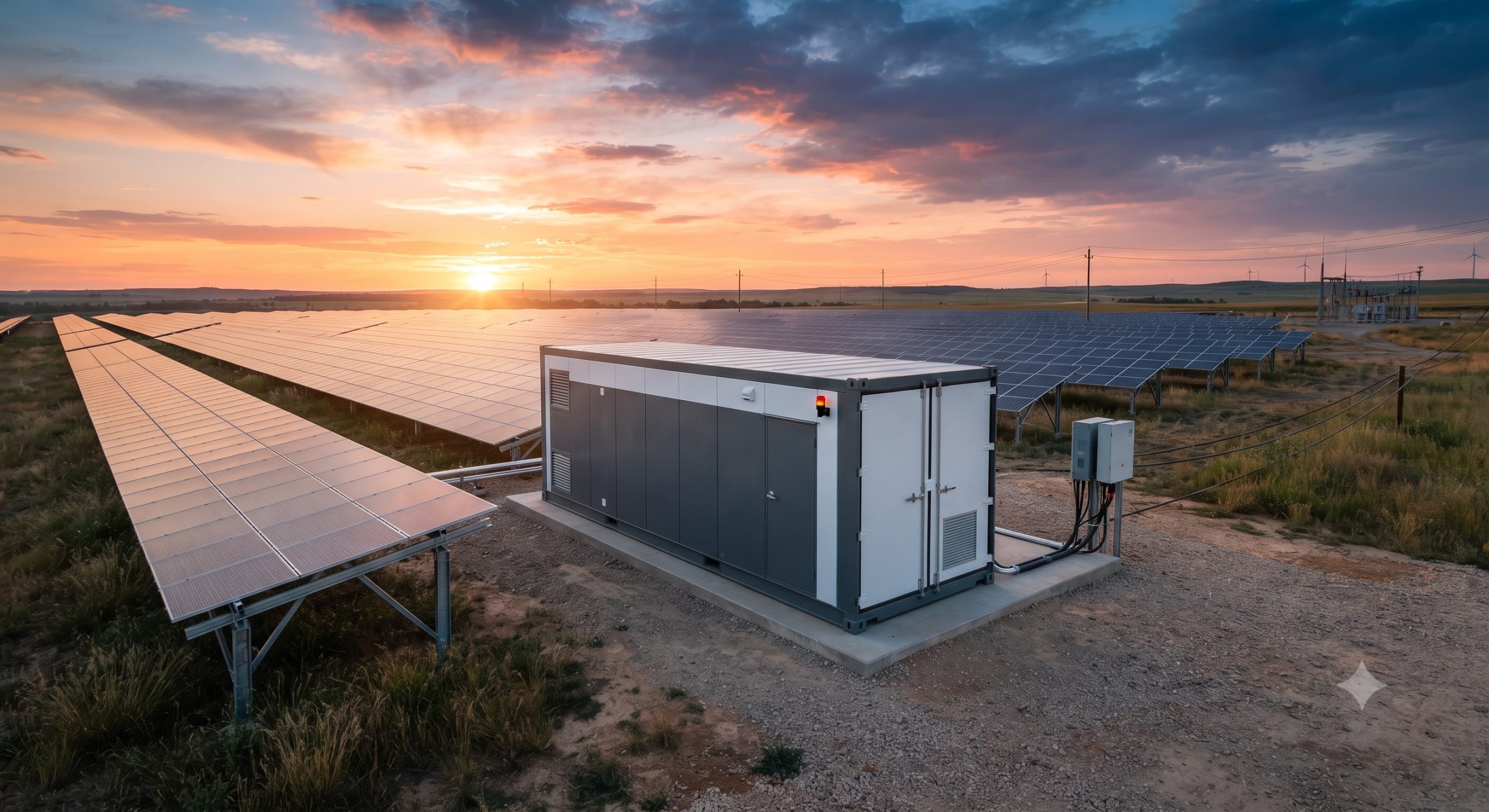
The platform is built around a modular, containerized design that integrates all core components into a compact, outdoor-rated enclosure. The architecture prioritizes safety and reliability through a multi-layered protection scheme.
– CELL-TO-PACK INTEGRATION: Our system utilizes prismatic LFP cells from Tier-1 manufacturers, arranged in a cell-to-pack (CTP) configuration to maximize volumetric energy density and simplify thermal management pathways. Each cell is individually monitored for voltage, temperature, and internal resistance by the distributed Battery Management System (BMS).
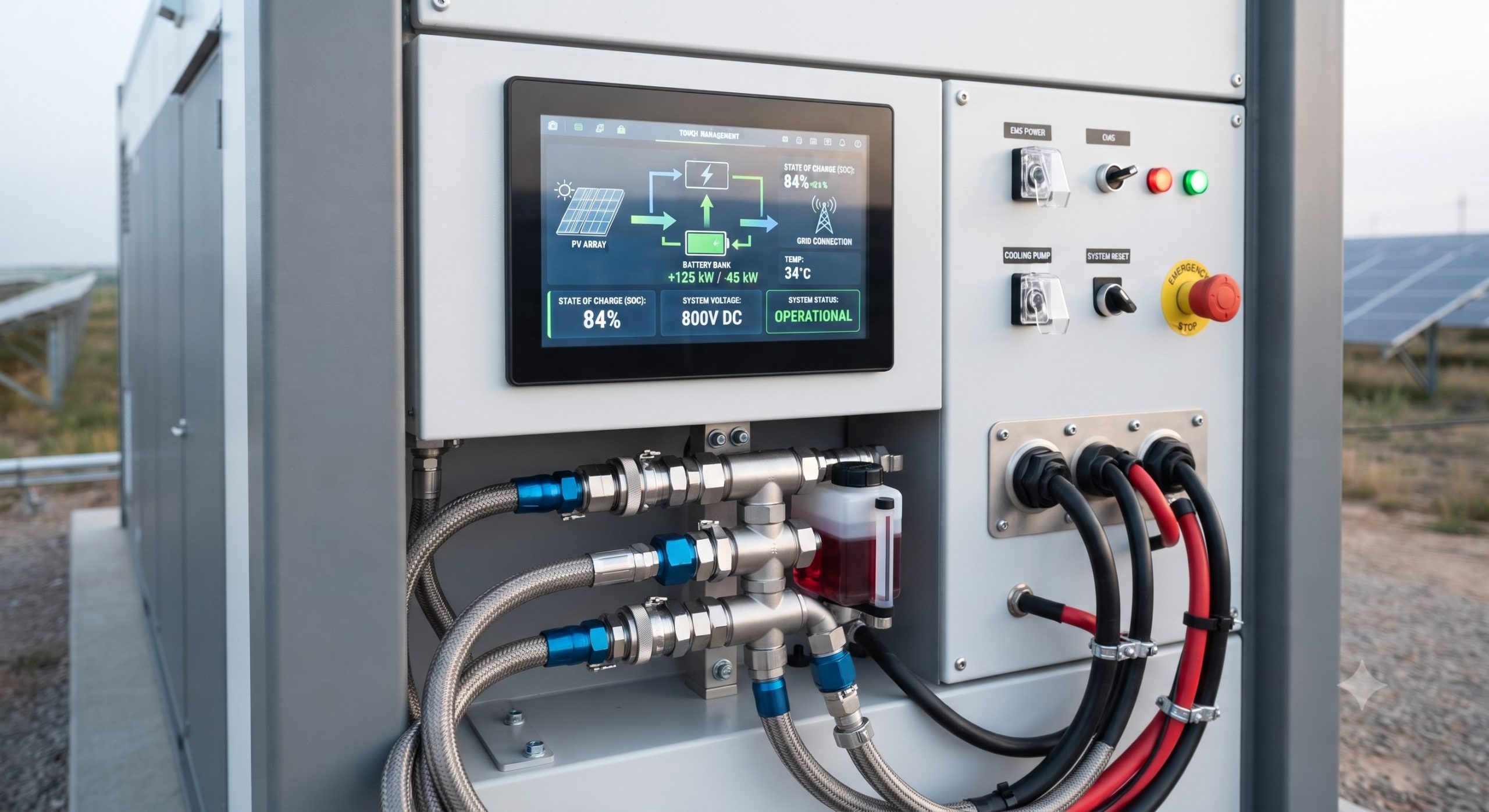
– MODULAR POWER CONVERSION SYSTEM (PCS): The bi-directional PCS features a three-level topology, ensuring high efficiency (up to 98.5%) and low total harmonic distortion (THD < 3%) across a wide range of grid conditions. The PCS supports seamless grid-tied and islanding operation, enabling critical load support and micro-grid formation. - LIQUID COOLING THERMAL MANAGEMENT: An advanced liquid cooling loop maintains cell operating temperatures within a precise 25°C ± 2°C window. This active thermal regulation extends cell cycle life by over 20%, improves round-trip efficiency, and ensures stable performance in ambient temperatures ranging from -30°C to +50°C. - FIRE SAFETY & SUPPRESSION: The system is equipped with a multi-stage safety system, including gas detection, aerosol-based fire suppression, and a proprietary anti-thermal-runaway propagation design. The enclosure is rated for outdoor use with an IP55 ingress protection rating, ensuring resilience against dust and water jets. KEY FEATURES - Feature 1: HIGH ROUND-TRIP EFFICIENCY: Achieve up to 92% system round-trip efficiency, maximizing the economic and environmental return of every stored kilowatt-hour. - Feature 2: DEEP DECARBONIZATION LOGIC: Pre-programmed EMS modes for peak shaving, load shifting, and PV self-consumption automatically optimize battery dispatch to minimize grid energy draw during peak carbon-intensity periods. - Feature 3: RAPID RESPONSE & GRID SUPPORT: Provide frequency regulation and grid stabilization services with a response time of < 40 milliseconds, enabling revenue generation from ancillary service markets. - Feature 4: MODULAR SCALABILITY: Easily scale system capacity from 215 kWh to over 10 MWh by paralleling multiple cabinets, allowing infrastructure investment to grow alongside operational needs. - Feature 5: COMPREHENSIVE CYBERSECURITY: The EMS includes a secure, encrypted communication gateway with role-based access control, ensuring operational data integrity and protection from cyber threats. COMPLIANCE & STANDARDS The Carbon Footprint Reduction Storage Solution is designed and tested to meet the most stringent international safety and performance standards, ensuring a bankable and insurable asset for global projects. - UL 9540: Certified for safety of energy storage systems and equipment. - UL 9540A: Tested for thermal runaway fire propagation, providing critical data for fire safety planning. - IEC 62619: Compliant with safety requirements for secondary lithium batteries and battery installations. - IEC 61000-6-2 / -6-4: Compliant with EMC immunity and emission standards for industrial environments. - UN 38.3: Certified for safe transport of lithium batteries. - CE & UKCA: Marked for compliance with applicable European and UK regulations. TECHNICAL SPECIFICATIONS The following specifications represent the standard configuration for a single 372 kWh cabinet. Performance metrics are subject to variation based on specific project requirements and site conditions.
| Parameter | Specification |
|---|---|
| Nominal Capacity | 372 kWh per cabinet |
| Usable Capacity (90% DoD) | 334.8 kWh |
| Nominal Voltage | 768 V DC |
| Voltage Range | 600 V – 876 V DC |
| Maximum Charge / Discharge Power | 186 kW (0.5C) |
| Peak Power (Surge) | 250 kW (10s) |
| Cooling Method | Active Liquid Cooling with Ethylene-Glycol/Water Mix |
| Operating Temperature Range | -30°C to +50°C (with derating above 45°C) |
| Ingress Protection Rating | IP55 (Outdoor Enclosure) |
| Dimensions (W x D x H) | 2200 mm x 1400 mm x 2400 mm |
| Weight | ~4,500 kg |
| Round-Trip Efficiency | > 92% (at 25°C, 0.5C) |
– OPERATING CONDITIONS: The system is rated for full performance operation at altitudes up to 2000 meters. For high-altitude or extreme temperature installations, please consult our engineering team for derating calculations.
– CYCLE LIFE: The Tier-1 LFP cells are rated for 6,000 cycles to 80% Depth of Discharge (DoD) at 25°C, ensuring a service life of over 15 years for typical daily cycling applications.
– COMMUNICATION PROTOCOLS: The EMS supports standard industrial protocols, including Modbus TCP/IP, CANbus, and IEC 61850, enabling seamless integration with existing Building Management Systems (BMS) and SCADA platforms.
📥 Download Technical Specification
Click the button below to view or download the full official PDF datasheet.