Overview
As a leading BESS Technical Support Engineer, I understand that the transition to commercial lithium battery systems introduces a steep learning curve regarding safety and maintenance. For plant engineers, facility managers, and procurement officers, the primary concerns revolve around preventing catastrophic failures like thermal runaway. This FAQ, specifically tailored for B2B energy storage stakeholders, moves beyond basic lifecycle questions to address the critical operational protocols governing fire safety, liquid cooling system integrity, and advanced BMS monitoring. We aim to demystify the engineering complexities, ensuring your energy asset remains a profitable, safe, and resilient component of your industrial infrastructure.
Frequently Asked Questions
- Q1: What is the most critical maintenance task to prevent thermal runaway in commercial BESS?
- The most critical task is the monthly validation of the liquid cooling loop’s flow rate and coolant dielectric strength. This ensures that the thermal management system effectively dissipates heat during high C-rate discharges, which is the primary precursor to cell degradation and eventual thermal runaway. Additionally, quarterly inspection of the gas detection sensors (for VOCs and CO) must be conducted to ensure early warning systems are functional.
- Q2: How does the BMS dictate active maintenance schedules and cell balancing?
- The Battery Management System (BMS) actively dictates maintenance by triggering automated reports on voltage and temperature deviations. If the BMS detects a cell imbalance exceeding 5%, a maintenance team must initiate a passive or active balancing cycle. For commercial systems, proactive calendar-based maintenance every 6 months involves analyzing the BMS data log to identify and isolate underperforming battery modules before they impact total system capacity or create a safety risk.
- Q3: What are the specific fire suppression system checks for NMC vs. LFP chemistry?
- LFP chemistry requires a water-based or aerosol suppression system focused on cooling adjacent cells, as they vent but do not typically explode; maintenance involves verifying water mist nozzles are unobstructed monthly. NMC systems, which can produce hydrogen, require a 3M Novec or FM-200 inert gas system, necessitating annual verification of agent weight and nozzle pressure, alongside mandatory gas-tight enclosure testing to prevent oxygen ingress.
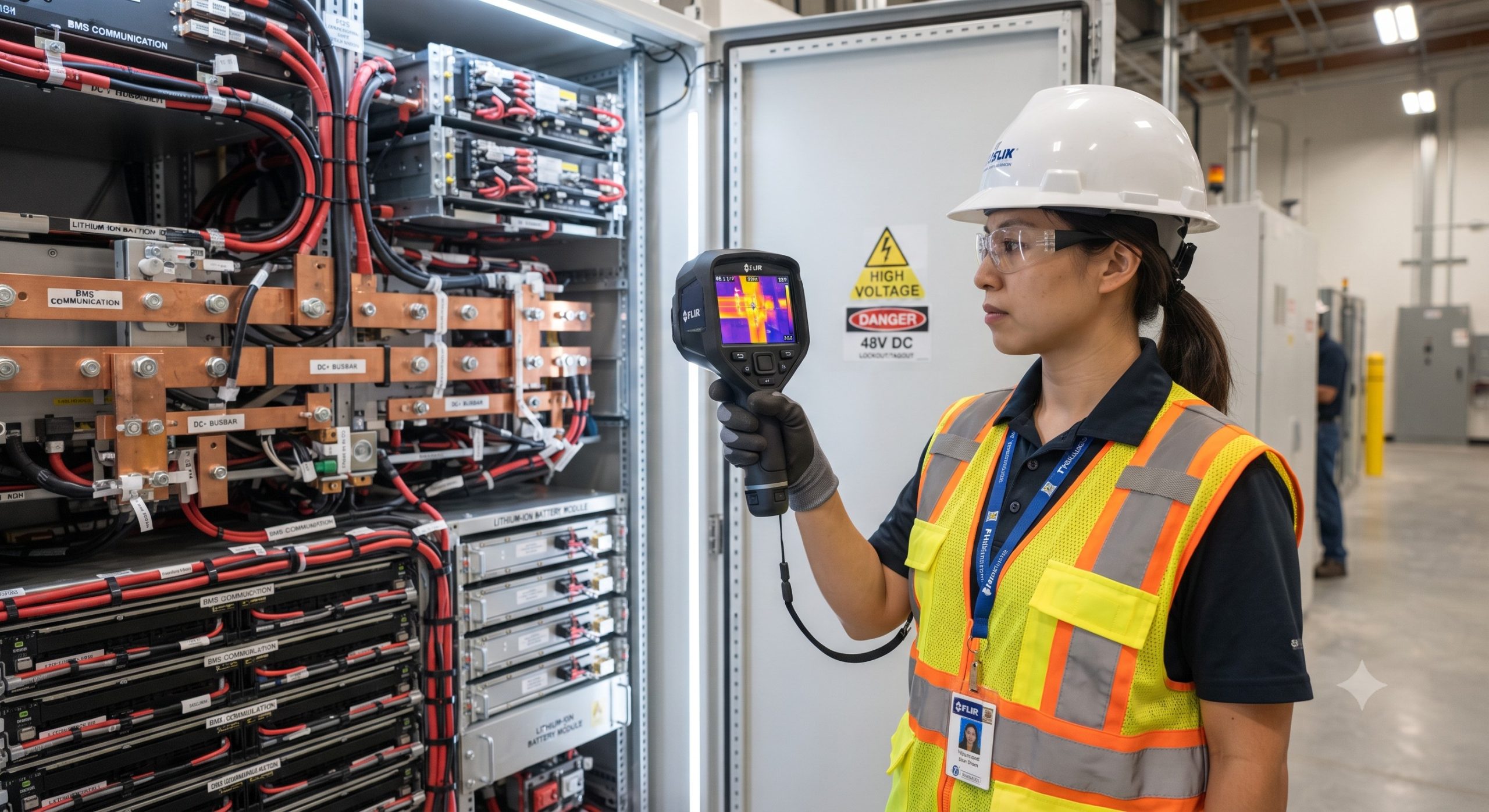
- Q4: What does the annual high-voltage isolation test involve for the DC busbars?
- The annual isolation test involves a HIPOT (High Potential) test applying 2x the system voltage + 1000V to measure insulation resistance, ensuring it exceeds the 1MΩ standard. The maintenance engineer uses a specialized megohmmeter to check all DC busbars and cabling for degradation of the dielectric insulation, which can be compromised by humidity or dust. A failure here mandates immediate replacement of affected wiring harnesses to prevent arcing or earth faults.
- Q5: Can I adjust maintenance frequency based on the system’s power cycling intensity?
- Yes, the maintenance strategy is dynamic and directly tied to the system’s cumulative energy throughput and Depth of Discharge (DoD). If your system operates beyond 1 cycle per day at >90% DoD, you should halve the standard quarterly filter cleaning interval for the HVAC/liquid chiller units. The system’s EMS (Energy Management System) provides a “wear index” that recommends advanced maintenance scheduling, ensuring operational costs align with actual usage intensity.
- Q6: What are the key signs that the liquid cooling system requires immediate service?
- Immediate service is required if the BMS dashboard shows a persistent temperature delta of >5°C between battery racks, or if the coolant reservoir level drops below the minimum mark (indicative of a leak). A milky or discolored appearance of the coolant fluid is a critical warning sign, indicating corrosion within the aluminum cold plates, necessitating an immediate fluid flush, system pressure test, and replacement with inhibited coolant.
- Q7: Does the cybersecurity of the BMS/EMS require maintenance updates?
- Absolutely, quarterly cybersecurity maintenance is mandatory for grid-tie and remote monitoring configurations. This specifically involves installing firmware patches for the BMS and EMS communication gateways to mitigate vulnerabilities like Modbus/TCP exploits. Maintenance requires scheduling remote access downtime, validating the backup configuration, and testing the failover to local control in case of a cyber-event.