Introduction: The Imperative of Dust-Free Protocols in Next-Gen Energy Storage
The global transition to sustainable energy hinges on the reliability and safety of lithium-ion batteries (LIBs). In the Commercial & Industrial (C&I) sector, where energy storage systems (ESS) operate at multi-megawatt scales to support peak shaving, grid stabilization, and renewable integration, the margin for error is nonexistent. A single manufacturing defect—often triggered by microscopic metallic dust or static charge—can cascade into a catastrophic thermal runaway event, compromising entire energy assets . This necessitates a paradigm shift toward dust-free lithium battery manufacturing. This guide delves into the critical intersection of advanced Battery Management Systems (BMS), fire suppression, and ultra-clean production environments, providing a comprehensive framework for safeguarding C&I energy storage investments. We explore how rigorous dust control, compliant with standards like IEC 62619 and UL 9540, directly enhances system longevity and operational safety.

Core Architecture & Battery Management: Engineering for Zero Defects
Dust-Free Production Standards: A Regulatory Overview
Manufacturing dust-free lithium batteries begins with stringent environmental controls. The industry adheres to rigorous standards such as the T/GACT 0005-2024 for clean and dry room maintenance , ensuring compliance with ISO 7 and ISO 8 cleanroom classifications . Critical areas, particularly electrode manufacturing and cell assembly, demand ultra-low dew points (as low as -50°C to -70°C) to prevent moisture ingress, which can react with LiPF6 salts to form corrosive hydrofluoric acid (HF) . Advanced dust extraction systems and electrostatic discharge (ESD) control are deployed across the production line—from slurry preparation to calendering and slitting—to eliminate metallic burrs and conductive particles that could penetrate separators and create internal short circuits .
Dry Electrode Technology (DET): Eliminating Solvent-Induced Contamination
To mitigate contamination risks inherent in conventional wet-slurry processes, leading manufacturers are adopting Dry Electrode Technology (DET). This solvent-free approach eliminates toxic binders and the energy-intensive drying ovens that can introduce particulate matter . By forming a free-standing film from a dry powder mixture, DET reduces space requirements by up to 65% and energy consumption by 70% . Critically, off-spec film can be recycled directly back into the process, minimizing waste and preserving active material integrity .
Technical Specifications: Core Parameters for C&I Energy Storage
For system architects and procurement specialists, the following specifications are essential for evaluating the performance and safety of dust-free manufactured BESS. These metrics underscore the advantage of Tier-1 LFP cells and advanced liquid cooling thermal control.
| Key Parameter | Technical Specification |
|---|---|
| Battery Chemistry | Tier-1 LFP (Lithium Iron Phosphate) |
| Cycle Life | ≥ 8000 cycles @ 90% Depth of Discharge (DoD) |
| Round-trip Efficiency | ≥ 95% (DC/DC) |
| Thermal Control | Advanced Liquid Cooling (vs. Air Cooling) |
| Operating Temp. Range | -20°C to 55°C with derating |
| Safety Compliance | IEC 62619, UL 9540, CE, UN38.3 |
Commercial ROI & Grid Support: The Financial Case for Quality
Investing in high-quality, dust-free lithium batteries translates directly to a superior Total Cost of Ownership (TCO). By preventing internal defects, manufacturers guarantee extended cycle life (>8000 cycles) and maintain high Round-trip Efficiency (RTE), typically exceeding 95%. This durability is crucial for maximizing revenue from peak shaving and demand response programs. The elimination of hidden defects reduces warranty claims and operational downtime, providing a clear ROI advantage. Furthermore, adherence to standards like UN38.3 and UL 9540A ensures insurability and facilitates seamless grid-tie integration, while an advanced EMS (Energy Management System) optimizes dispatch strategies to capture utility incentives .
Deployment Scenarios: C&I Micro-Grids and EV Supercharging
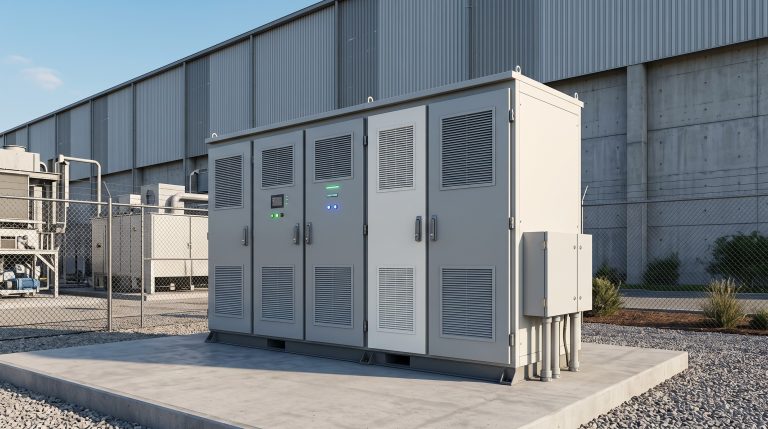
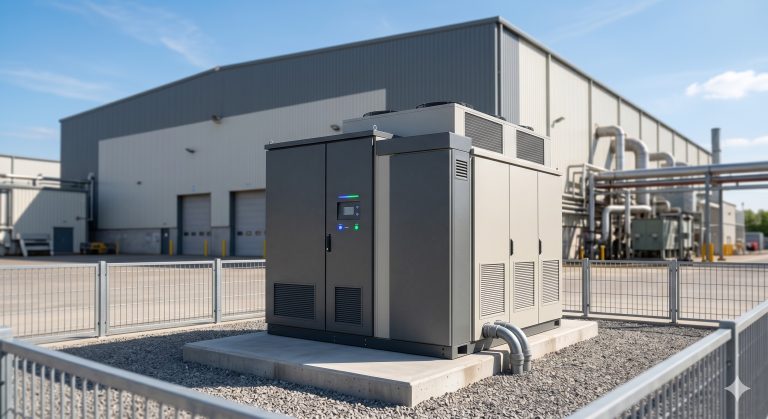
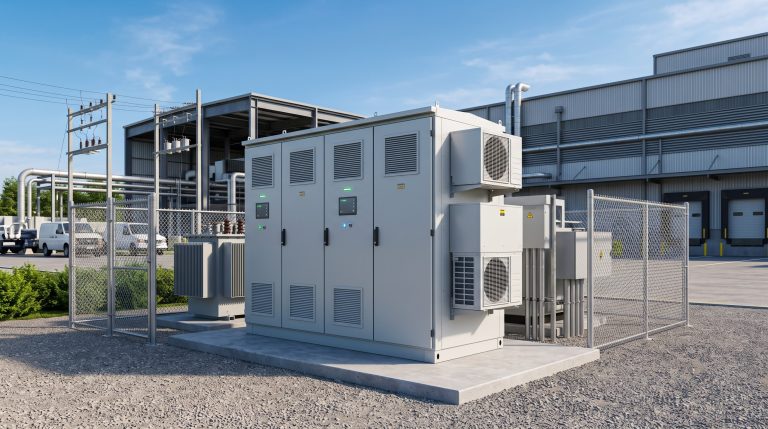
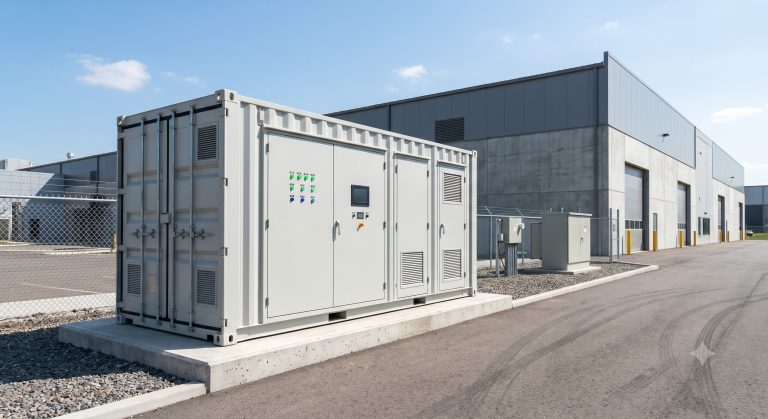
The deployment of dust-free BESS is critical across several high-stakes C&I environments. In Industrial Parks, these systems provide energy independence and mitigate the impact of grid instability. For PV-Storage-Charging (光储充) hubs, the reliability of the battery pack is paramount to support rapid EV supercharging without compromising grid stability.

Safety and Scalability: VPP and Frequency Regulation
The inherent safety of dust-free cells, characterized by superior cell balancing and BMS integration, makes them ideal for Virtual Power Plant (VPP) applications. Their rapid response times (< 30ms) are essential for frequency regulation and grid support services, ensuring stability as renewable penetration increases .
Conclusion: Building a Safer, More Resilient Energy Future
Dust-free lithium battery manufacturing is not merely a quality benchmark; it is the foundational pillar for a safe and profitable energy transition. By integrating advanced dry electrode processes, rigorous contamination control, and state-of-the-art BMS, the industry can produce ESS that deliver exceptional performance and unmatched safety. As we move towards a zero-carbon future, the commitment to eliminating particulates and moisture from the production chain will define the leaders in the B2B energy storage market.