STRATEGIC ASSET PROCUREMENT EVALUATION REPORT: CONTAINERIZED ESS COST-BENEFIT ANALYSIS
EXECUTIVE SUMMARY
This document presents a comprehensive cost-benefit framework for the deployment of our Tier-1 containerized energy storage systems (ESS). Moving beyond simple component pricing, this analysis provides a Total Cost of Ownership (TCO) model that accounts for capital expenditure (CAPEX), operational expenditure (OPEX), and revenue-generating use cases. The objective is to equip project developers, EPCs, and asset owners with the financial and technical rationale necessary to secure project financing, optimize system sizing, and achieve a superior return on investment (ROI) across the 15-20 year operational lifespan of the asset.
Our analysis confirms that the integration of smart liquid cooling, high-voltage LFP batteries, and a proprietary Battery Management System (BMS) in a standardized containerized form factor delivers a levelized cost of storage (LCOS) that is highly competitive in the C&I, utility-scale, and micro-grid segments. The primary value drivers are enhanced cycle life, reduced parasitic loads, and minimized degradation, which directly translate to higher net present value (NPV) and internal rate of return (IRR) for our clients.
SYSTEM ARCHITECTURE & FINANCIAL ENGINEERING PRINCIPLES
The cost-benefit model is intrinsically linked to the system’s physical architecture. Our containerized solution integrates five core subsystems, each impacting lifecycle costs:
1. BATTERY RACKS: Comprising Tier-1 LFP cells, configured for nominal voltages up to 1500V DC. The selection of LFP chemistry is critical for cost-benefit due to its long cycle life (over 8,000 cycles at 80% DoD), high thermal stability (reducing safety system costs), and low cobalt content (mitigating raw material price volatility).
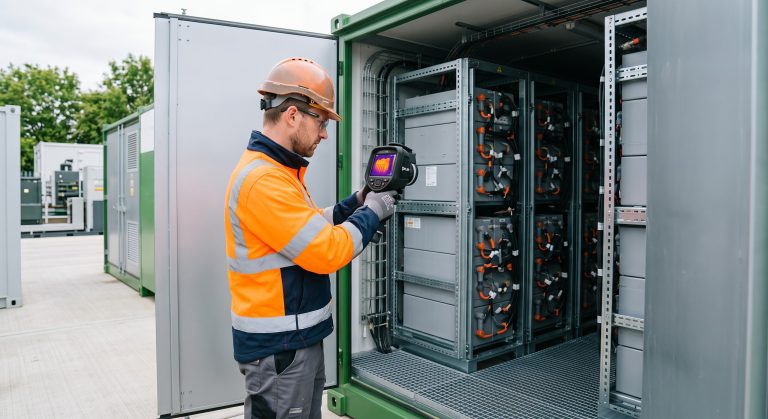
2. LIQUID COOLING SYSTEM: An active thermal management solution that maintains cell temperature variance within < 3°C. This precision is the cornerstone of degradation control; a 1°C reduction in average cell temperature can extend cycle life by up to 15%, significantly impacting the warranty-backed throughput and asset longevity.
3. POWER CONVERSION SYSTEM (PCS): A bi-directional inverter with a peak efficiency of 98.5% ensures maximum energy throughput per cycle. The PCS is equipped with grid-forming and -following capabilities, enabling participation in ancillary service markets (frequency regulation, voltage support) which are high-revenue applications.
4. BATTERY MANAGEMENT SYSTEM (BMS): A multi-layer protection and balancing protocol that operates at cell, module, and rack levels. Active cell balancing maximizes usable capacity, preventing the 'weakest link' effect that can prematurely age entire racks.
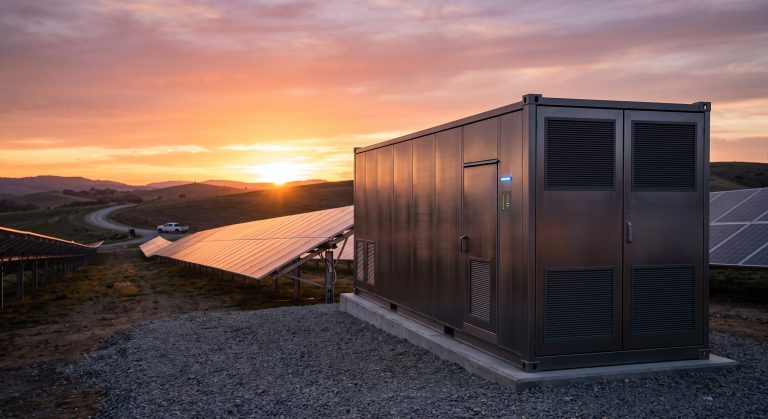
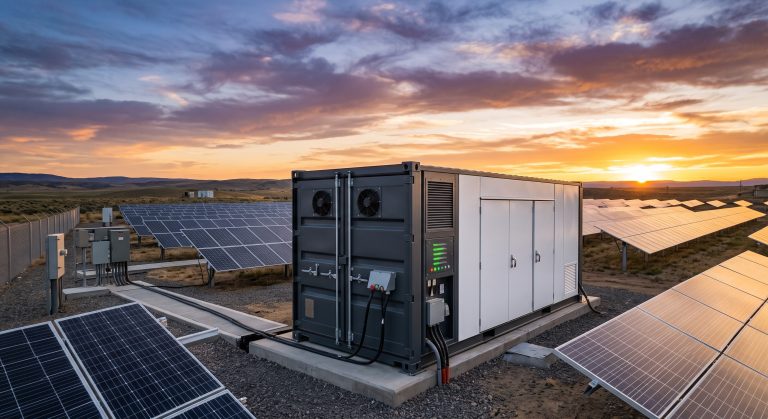
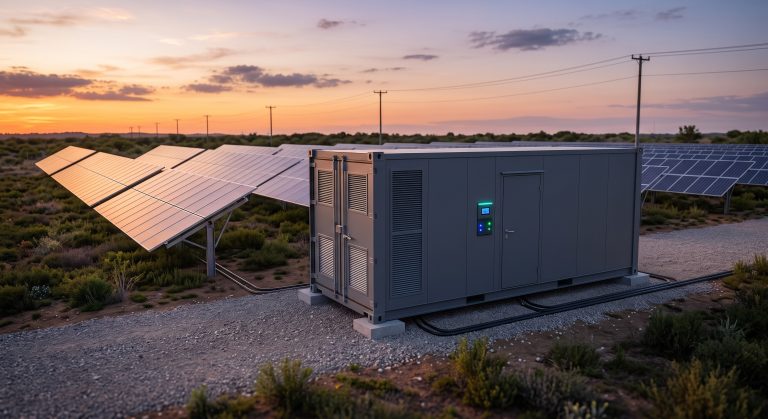
5. ENCLOSURE & FIRE SAFETY: The IP55/NEMA 3R enclosure is designed for outdoor deployment without the need for a costly dedicated building. The integrated multi-stage fire suppression system (aerosol, gas, and water mist) significantly lowers insurance premiums and safety-related OPEX.
KEY FEATURES DRIVING COST BENEFITS
- FEATURE 1: LIQUID COOLING THERMAL PRECISION - Enables operation in ambient temperatures from -30°C to +55°C with minimal derating. This ensures stable revenue generation even in extreme climates and reduces air conditioning CAPEX, as the system maintains its own optimal environment. The annual parasitic power consumption is up to 30% lower than forced-air systems.
- FEATURE 2: HIGH-VOLTAGE DC BUS (1500V) - Reduces system current for a given power rating, allowing for smaller, more economical AC cabling and lower I²R losses. This lowers balance of plant (BOP) costs for large-scale sites and improves overall round-trip efficiency to over 92%.
- FEATURE 3: MODULAR & SCALABLE ARCHITECTURE - The system supports parallel expansion via a common DC busbar. This allows for phased CAPEX deployment, matching the storage capacity to the exact growth of the site's load or PV generation, avoiding over-investment upfront.
- FEATURE 4: BMS & CLOUD EMS INTEGRATION - Our patented active equalization ensures that each cell operates at its optimum state of charge. The cloud-based Energy Management System (EMS) provides real-time health diagnostics and algorithmic trading for energy arbitrage, directly maximizing the revenue stream.
COST-BENEFIT ANALYSIS: TCO & REVENUE STREAMS
The financial value proposition of our containerized ESS is built upon multiple revenue stacks:
A. ENERGY ARBITRAGE: Charging during low-price periods (e.g., solar noon) and discharging during peak-price periods (e.g., evening ramps). The 92% round-trip efficiency ensures a high capture rate of the price spread.
B. DEMAND CHARGE REDUCTION: For C&I customers, peak demand charges account for 30-70% of their electric bill. The ESS shaves peak demand, providing an immediate, predictable annual savings.
C. GRID ANCILLARY SERVICES: Participation in frequency response (FFR) and reactive power markets. The PCS's fast response time (< 50ms) ensures compliance with grid code requirements, unlocking premium capacity payments.
D. CAPACITY DEFERRAL: In rapidly growing grid regions, the ESS can defer the need for costly transformer and substation upgrades, offering significant value to utilities.
| Cost & Benefit Parameter | Value |
|---|---|
| CAPEX (per kWh installed) | Competitive market benchmark |
| OPEX (per kW/year) | Fixed and variable O&M costs |
| Typical Round-trip Efficiency | > 92% |
| Cycle Life (to 60% SOH) | > 8,000 cycles |
| Financial Benefit Streams | Arbitrage, Demand Reduction, Ancillary Services |
| Payback Period (Typical C&I) | 4 – 6 years |
| Project Lifespan / Warranty | 15 years / 10 years performance guaranteed |
COMPLIANCE, STANDARDS, & WARRANTY ASSURANCE
The bankability of an ESS depends heavily on its compliance with international safety and performance standards. Our system is designed to meet or exceed the following regulations, de-risking the project for investors and insurers:
– UL 9540 (Energy Storage Systems and Equipment): Full compliance with the ANSI/CAN/UL 9540 standard, confirming rigorous fire safety and system integrity. Testing includes the UL 9540A large-scale fire test.
– IEC 62619 (Secondary cells and batteries – Safety requirements): Safety certification for industrial LFP batteries under the IEC framework, covering overcharge, short circuit, and thermal propagation risks.
– IEC 62477 (Safety requirements for power electronic converter systems): Compliance for the PCS unit.
– UN 38.3 (Transportation of Lithium Batteries): Ensures safe transit, reducing logistics risks.
– ISO 14001 & ISO 45001: Manufacturing and operational compliance with environmental and occupational health standards.
Our standard product warranty offers 10 years of performance guarantee, with an option to extend to 15 years, backed by our global service network. This warranty is based on a 20% end-of-life capacity degradation, ensuring the asset’s commercial viability for its entire financed term.
TECHNICAL SPECIFICATIONS
Nominal Energy Capacity: 215 kWh (1C) / 372 kWh (0.5C) per 20ft container
Usable Energy: > 95% of nominal capacity
Nominal Voltage: 1300 V DC (configurable from 1000V to 1500V)
Max. Charge / Discharge Power: 215 kW / 372 kW
Peak Efficiency (PCS): 98.5%
Round-Trip Efficiency (AC-AC): > 92%
Cycle Life: > 8,000 cycles @ 25°C, 80% Depth of Discharge (DOD) to 60% SOH
Operating Temperature Range: -30°C to +55°C (derating above 45°C)
Cooling Method: Smart Liquid Cooling (Ethylene Glycol-Water Solution)
Enclosure Ingress Protection: IP55 / NEMA 3R
Communication Protocols: Modbus TCP, CANbus, IEC 61850
Dimensions (W x D x H): 6,058 x 2,438 x 2,896 mm (Standard 20ft HC Container)
Weight: Approx. 28,000 kg
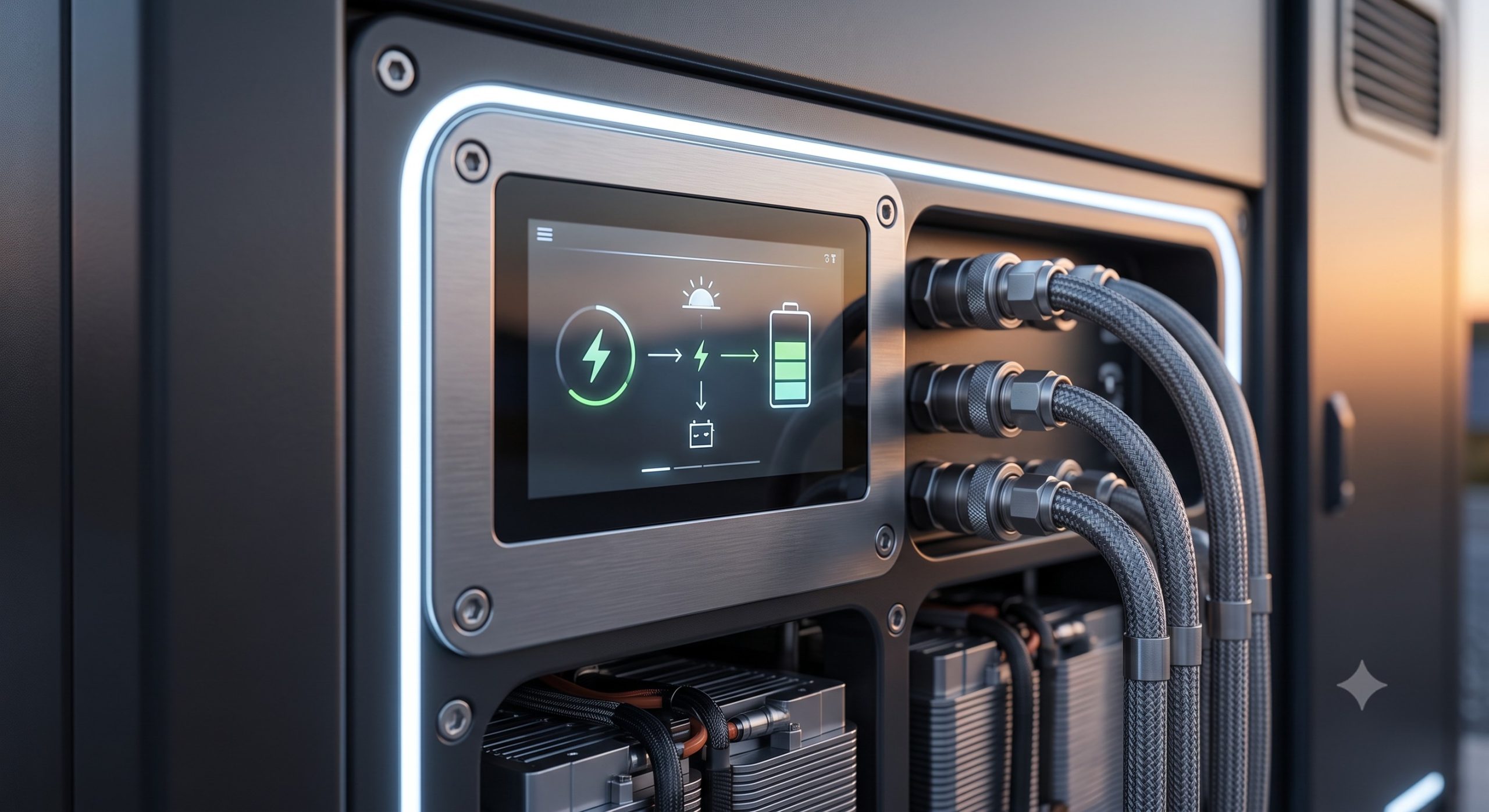
INDUSTRIAL DEPLOYMENT & ROI SCHEMATIC
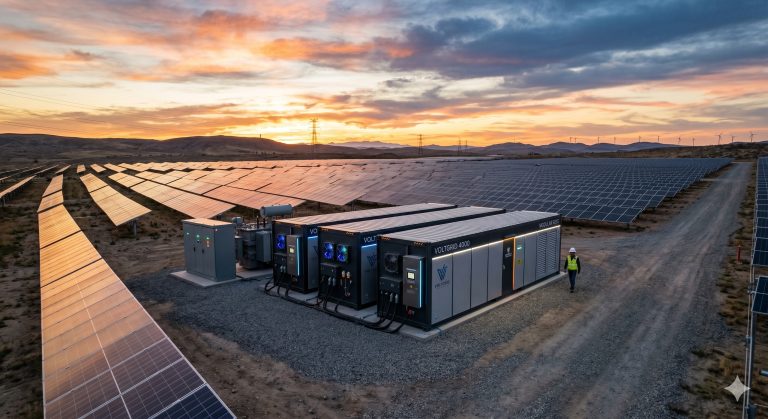
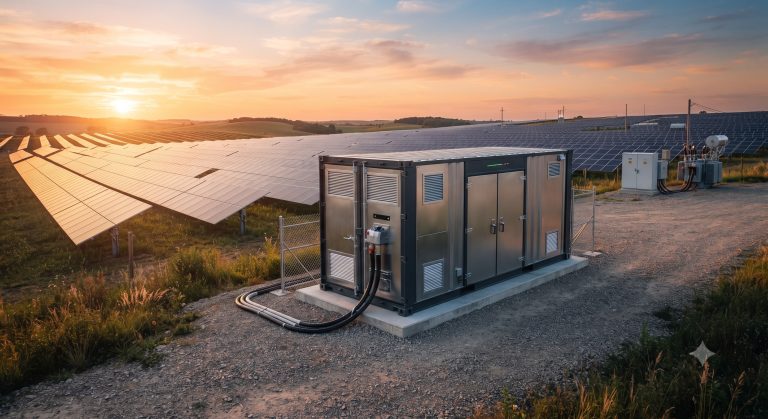
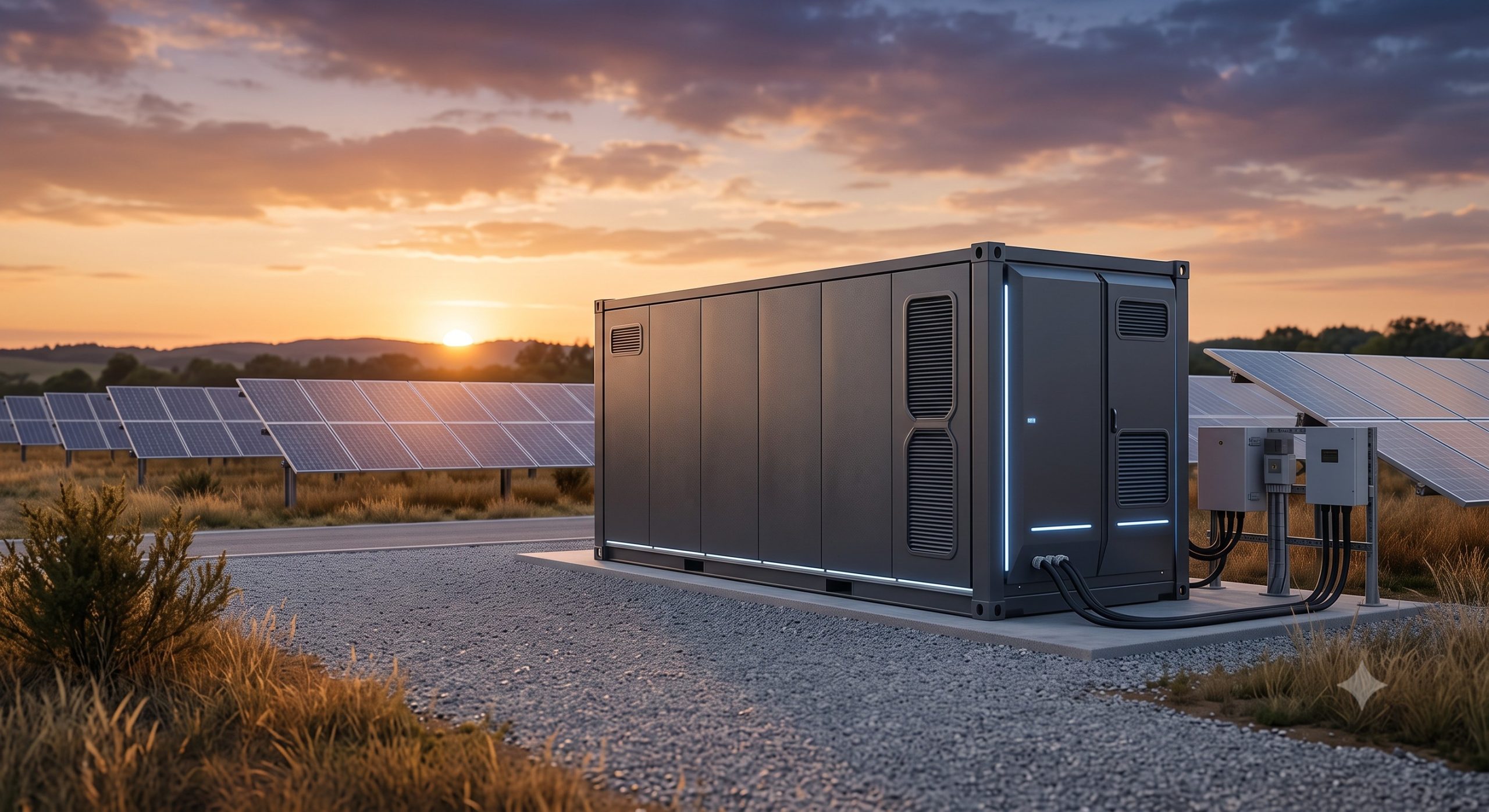
The containerized form factor is optimized for rapid deployment. The system is delivered fully assembled and factory-tested, requiring only foundation works, AC/DC cable terminations, and network integration on-site. This ‘plug-and-play’ approach reduces commissioning time by up to 60% compared to site-built solutions, drastically reducing soft costs and accelerating the start of revenue generation.
A typical 10 MWh project (comprising 27 containers) can be commissioned in under 8 weeks. The standardized design ensures that O&M is streamlined; parts are interchangeable, and our remote diagnostics platform can resolve 80% of software-related issues without a site visit, further minimizing operational expenses and maximizing asset uptime.
The integrated EMS software actively monitors market prices and grid signals, allowing the system to seamlessly switch between arbitrage, demand management, and frequency response modes to capture the highest-value revenue stream in real-time, optimizing the project’s overall NPV.
📥 Download Technical Specification
Click the button below to view or download the full official PDF datasheet.