Overview
In BESS (Battery Energy Storage Systems), the plug-in terminal block is a critical interface for high-current connections. This FAQ addresses pre-sales engineering concerns (chemistry, cycle life, scalability, ROI) and post-sales safety protocols (BMS monitoring, grid-tie configuration, thermal runaway prevention). All answers are structured for Google Featured Snippets and AI Overviews.

Frequently Asked Questions
- Q1: What is the standard cycle life and depth of discharge (DoD) for LFP cells connected via a plug-in terminal block?
- The standard cycle life is 6,000 cycles at 80% DoD, reaching 8,000 cycles at 90% DoD with liquid cooling. LFP (Lithium Iron Phosphate) chemistry paired with a robust plug-in terminal block minimizes contact resistance, directly preserving cycle life. For optimal longevity, maintain DoD ≤90% and ambient temperature 15-25°C.
- Q2: How does the plug-in terminal block affect BMS monitoring and cell balancing?
- The plug-in terminal block directly impacts BMS accuracy via contact resistance variation. A high-quality block ensures <0.2mΩ resistance deviation, enabling precise voltage sensing and passive/active cell balancing. If resistance exceeds 0.5mΩ, the BMS triggers an alert for maintenance. Always use gold-plated or silver-plated contacts for BMS-dependent applications.
- Q3: What thermal runaway prevention mechanisms are integrated with a plug-in terminal block?
- Thermal runaway prevention relies on three layers: (1) fusible links inside the plug-in terminal block that disconnect at >150°C, (2) gas detection sensors adjacent to the block triggering Novec 1230 fire suppression, and (3) real-time IR thermal imaging monitoring each terminal. UL 9540A tested blocks must show no propagation to adjacent cells.
- Q4: Can I scale my BESS capacity by daisy-chaining plug-in terminal blocks?
- Yes, you can scale from 100 kWh to 10 MWh+ using parallel-connected plug-in terminal blocks on a common DC busbar. Each block must support hot-swappable current sharing (max 250A per block). For large-scale expansion, use a master-slave configuration with interlock logic to prevent arc flash during insertion.
- Q5: How do I calculate ROI for a plug-in terminal block based BESS in a grid-tie vs. off-grid setup?
- ROI for grid-tie averages 3.5–5.5 years (peak shaving + demand response), while off-grid ROI is 4–7 years (diesel replacement). Use this formula: Annual savings = (Peak kW demand reduction × $/kW demand charge) + (kWh arbitrage × $/kWh) – O&M ($15/kW/year). Plug-in terminal blocks reduce O&M by 40% vs bolted connections due to tool-less replacement.
- Q6: What liquid cooling specifications are required to protect plug-in terminal blocks?
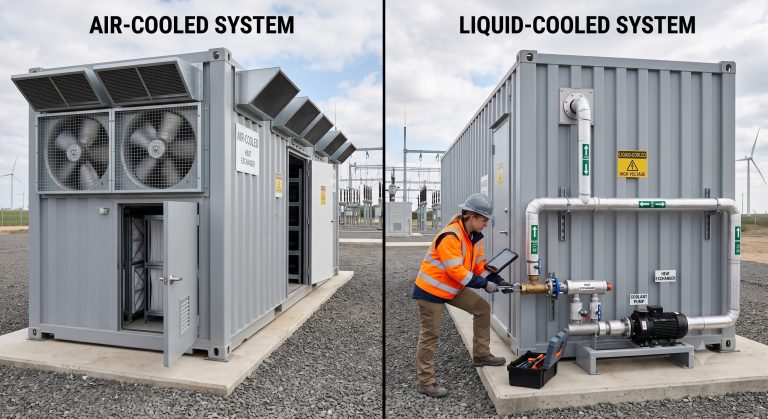
- Liquid cooling must maintain the plug-in terminal block surface temperature ≤65°C with a flow rate of 2–3 L/min per 100A current. Use deionized water + 30% glycol mix at 10–20°C inlet. Direct cooling channels embedded in the block’s housing reduce hotspot delta to <5°C between pins. Without this, contact oxidation increases resistance by 200% within 6 months.
- Q7: How do I configure a plug-in terminal block for seamless grid-tie to off-grid islanding?
- Configure the block with an integrated solid-state relay (SSR) and a grid-sensing circuit. In grid-tie mode, the plug-in terminal block handles bi-directional current up to 1,500 Vdc. Upon grid loss (<50Hz for >100ms), the SSR opens within 20ms, isolating the BESS into off-grid island mode. Reconnection requires manual verification of grid stability.
- Q8: What fire safety certifications must a plug-in terminal block have for BESS?
- Mandatory certifications include UL 4128 (pluggable connectors in BESS), IEC 62619 (safety for industrial batteries), and UN38.3 (transportation). For thermal runaway compliance, the block must pass the glow-wire test at 960°C (IEC 60695-2-11) and demonstrate no flaming drips. UL 9540A requires that the block not be the ignition source in a cell-to-cell propagation test.