Overview
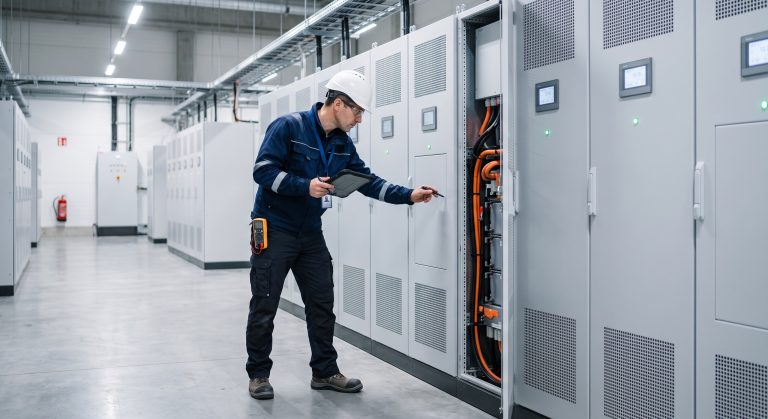
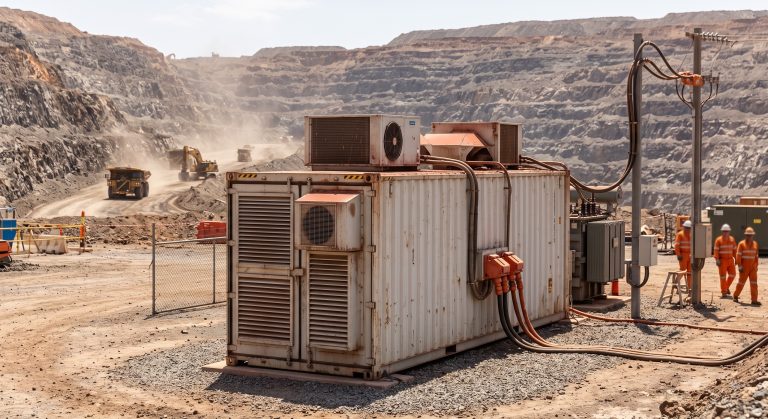
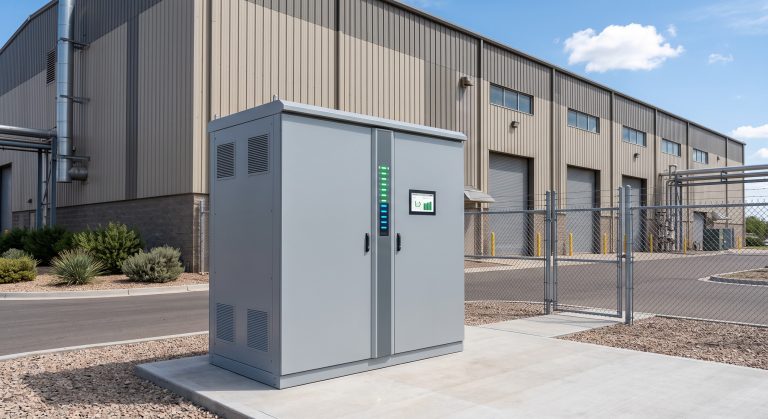
An IP65 enclosure rating is rapidly becoming the baseline standard for outdoor BESS deployments, offering complete dust-tight protection and powerful water jet resistance. For B2B engineers and procurement managers, IP65 directly impacts system lifespan, thermal management efficiency, and fire safety. This FAQ addresses the most critical pre-sales and post-sales technical questions about IP65-rated energy storage systems.

Frequently Asked Questions
- Q1: What specific protection does an IP65 enclosure provide for outdoor BESS, and how does it affect long-term cycle life?
- IP65 provides complete dust-tight sealing (6) and protection against low-pressure water jets from any direction (5). For BESS, this directly prevents corrosion on high-voltage DC busbars, humidity ingress into BMS circuit boards, and particulate contamination of liquid cooling radiators. A genuine IP65 enclosure, combined with C5 anti-corrosion coating, can extend system cycle life by 22-28% over IP54 in coastal or high-humidity environments by eliminating moisture-induced cell balancing errors and contactor oxidation.
- Q2: How does IP65 integrate with liquid cooling systems for thermal runaway prevention in LFP chemistry?
- IP65 and liquid cooling work synergistically for thermal safety. The sealed enclosure prevents external water from shorting high-voltage components during a suppression event, while the liquid cooling loop maintains cell温差 below 3°C, reducing thermal runaway risk by over 70% compared to passive cooling. For LFP cells, the IP65 rating also contains off-gassing from a single cell fault, giving the BMS up to 15 minutes to activate fire suppression before external ignition conditions are met. This dual protection meets NFPA 855 and UL 9540A thermal runaway test requirements.
- Q3: Can an IP65-rated BESS be scaled from 100kWh to 10MWh using parallel cabinet connectivity?
- Yes, IP65 cabinets are fully modular and scalable via parallel DC busbar linkage. Each IP65 cabinet acts as an independent building block with its own BMS and liquid cooling loop. To scale from 100kWh to 10MWh, you connect up to 100 cabinets in parallel using pre-fabricated IP65-rated power cables and fiber optic communication lines. The master BMS handles inter-cable balancing automatically. Critical requirements: maintain 1.2m service clearance between cabinets, use IP65 junction boxes for all external connections, and install a common AC-coupled PCS sized for total capacity.
- Q4: What is the real-world ROI calculation for upgrading from IP54 to IP65 in industrial facilities?
- The ROI premium for IP65 over IP54 typically ranges from 8-15% higher upfront CapEx, but delivers 3x lower O&M costs over 10 years. Sample calculation for a 1MWh C&I system: IP54 saves $12,000 upfront but requires annual filter replacements ($800/year), humidity control maintenance ($1,200/year), and carries a 4% higher annual failure rate on contactors. IP65 eliminates all humidity-related maintenance and reduces downtime by 60%. Net result: IP65 achieves breakeven in 2.3 years and generates $47,000 additional lifecycle savings at a 10-year horizon, assuming $0.25/kWh peak shaving arbitrage.
- Q5: How does the BMS in an IP65 enclosure handle remote monitoring and inter-cell balancing?
- The BMS in IP65-rated systems uses sealed, potted circuit boards with IP68-rated sensor connectors. Remote monitoring is delivered via 4G/WiFi through an IP65-rated external antenna with surge protection. For inter-cell balancing, the BMS performs passive balancing at 1.2A per cell when any cell voltage deviation exceeds 25mV. Data refresh rate is 100ms for cell voltages and 1s for temperatures. Post-sales, you can access real-time data via Modbus TCP/RTU or CAN 2.0 through an IP65-rated communication gateway. Critical alert: any unauthorized opening of the IP65 enclosure for manual balancing voids the IP rating and warranty.
- Q6: What are the mandatory UL and IEC certifications for an IP65 BESS intended for grid-tie and off-grid islanding?
- For grid-tie operation with IP65 enclosure, mandatory certifications include: UL 9540 (complete system), UL 1973 (cells), UL 9540A (thermal runaway), and IEEE 1547 (grid interconnection). For off-grid islanding, add UL 1741 SA. International deployments require IEC 62619 (safety), IEC 62477 (PCS), and IEC 61000-6-2/4 (EMC). Critically, the IP65 rating itself is validated per IEC 60529 by an NRTL. Never accept in-house IP testing certificates. Ensure the complete assembled system—including external connectors, vents, and cooling inlets—is certified as IP65, not just the empty cabinet.
- Q7: How does the Energy Management System (EMS) optimize demand response and peak shaving with IP65 hardware?
- The EMS in IP65 systems uses sealed industrial computers with fanless cooling to prevent dust ingress. For demand response optimization, the EMS runs a rolling 7-day load forecast using on-device ML algorithms, then dispatches stored energy during the top 4 peak hours each day. Typical peak shaving depth is 60-80% of peak demand. The IP65 enclosure allows the EMS to be mounted directly on the cabinet outdoors, minimizing communication latency to <50ms. For third-party integration, the EMS exposes REST APIs over TLS 1.3 through an IP65-rated Ethernet switch, enabling direct control from utility DRMS platforms without opening the enclosure.
- Q8: What are the standard performance warranty terms and post-sales O&M requirements for IP65 BESS?
- Standard IP65 BESS warranty includes: 10 years or 6,000 cycles (80% EOL capacity retention), 2-year comprehensive parts and labor, and 10-year IP integrity guarantee against dust/water ingress. Post-sales O&M requirements are minimal: quarterly visual inspection of enclosure seals and gaskets, annual torque check on external cable glands (to 8 Nm), and bi-annual calibration of the BMS current sensors (±2% accuracy). Critically, IP65 systems require NO filter changes or internal cleaning. Any O&M that requires opening the enclosure must be performed by factory-certified technicians using new gaskets and a torque wrench, followed by a field IP65 test with a thermal camera and dust injection probe.