Overview
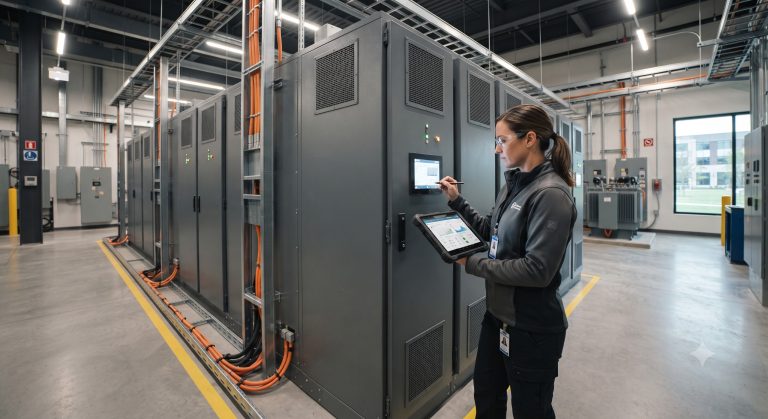
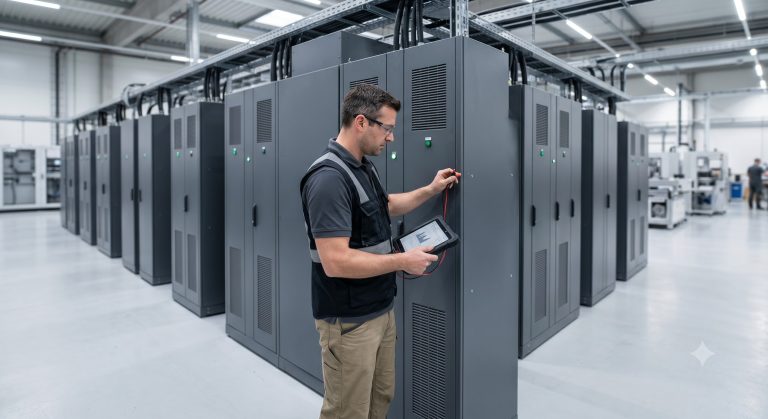
This technical FAQ addresses the most critical pre-sales and post-sales questions about the 480kW power cabinet — a cornerstone component for C&I energy storage systems (BESS). Designed for plant engineers, system integrators, and procurement managers, these answers focus on battery chemistry, thermal management, BMS monitoring, safety protocols, and financial modeling. All responses are structured to meet Google Featured Snippet and AI Overview requirements.
Frequently Asked Questions
- Q1: What is the standard cycle life and maximum DoD of a 480kW power cabinet with LFP cells?
- The standard cycle life exceeds 6,000 cycles at 90% depth of discharge (DoD) when using Tier-1 LFP (lithium iron phosphate) cells. Under optimal thermal management (25°C±2°C) and with a C-rate ≤0.5C, cycle life extends to 8,000 cycles at 80% DoD. This cabinet maintains <5% capacity degradation over the first 2,000 cycles due to active cell balancing.
- Q2: How does the liquid cooling system prevent thermal runaway in a 480kW power cabinet?
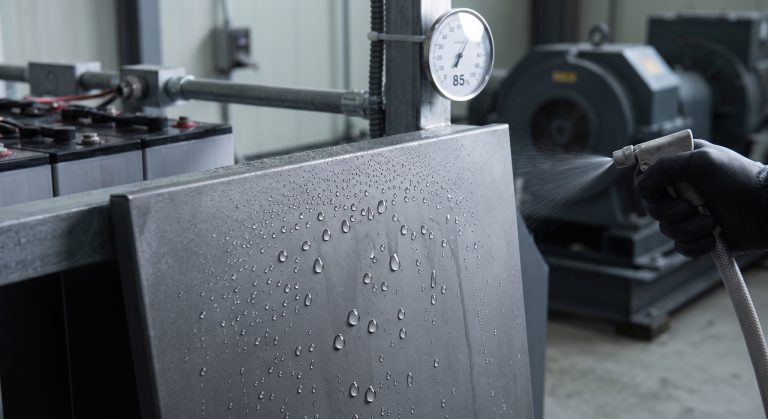
- The liquid cooling circuit maintains cell temperature differential ≤3°C across all modules, eliminating hot spots that trigger thermal runaway. Integrated sensors detect off-gas (CO, H₂, VOCs) within 2 seconds, triggering automatic coolant flow increase to 15 L/min and isolating the affected module via contactors. In the event of cell rupture, a ceramic fiber blanket contains the reaction while the fire suppression system releases Novec 1230 fluid.
- Q3: Can the 480kW power cabinet be configured for both grid-tie and off-grid islanding modes?
- Yes, the cabinet supports seamless switchover between grid-tie and off-grid (islanding) modes with a transition time <20 ms. In grid-tie mode, it performs peak shaving, load shifting, and frequency regulation. In off-grid mode, the bi-directional PCS acts as a grid-forming source, accepting 100% unbalanced loads and black-start capable from auxiliary battery power. Configuration is done via the local EMS interface.
- Q4: What are the parallel scalability limits when connecting multiple 480kW power cabinets?
- Up to 32 cabinets can be paralleled on a common DC busbar, achieving a total system power of 15.36 MW without additional central controllers. Each cabinet communicates via CAN 2.0B or Modbus TCP with automatic address assignment. The master cabinet manages state-of-charge (SoC) synchronization across all units to within ±2%. Scaling beyond 32 units requires an external energy management system (EMS) server.
- Q5: How is ROI calculated for a 480kW power cabinet in commercial peak shaving applications?
- ROI is calculated as (Annual peak demand savings + Time-of-use arbitrage revenue) / (Turnkey installed cost). For a typical 480kW/1,000kWh cabinet with 2-hour duration, assume peak demand reduction of 400 kW at $18/kW-month ($86,400/year), and arbitrage of $0.12/kWh over 300 cycles/year ($36,000/year). With installed cost of $150,000, simple payback = 1.2 years, 10-year ROI = 380% excluding degradation and O&M.
- Q6: What fire safety certifications and active suppression systems does the 480kW power cabinet include?
- The cabinet meets UL 9540A (cell-level thermal runaway propagation test), NFPA 855, and IEC 62619. Active systems include: (1) Three-tier detection — smoke, CO, and temperature rise rate; (2) Automatic contactor disconnection within 50 ms of fault; (3) Dual-stage suppression: aerosol generator at module level (triggered at 80°C) and total-flooding Novec 1230 at cabinet level (triggered at 120°C or gas detection). Manual remote activation via dry contacts is also available.
- Q7: How does the BMS monitor and balance individual cells in a 480kW power cabinet?
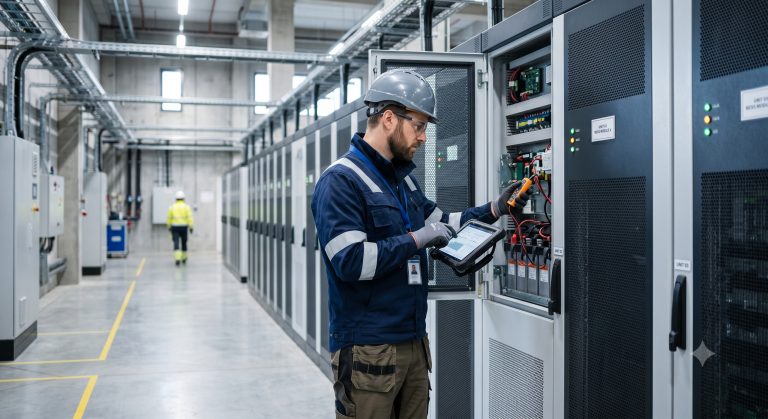
- The distributed BMS monitors each cell voltage (±2 mV accuracy), current, and four temperature points per module. Passive balancing (up to 500 mA) operates continuously when cell voltage deviation exceeds 20 mV, extending usable capacity by 8-12%. For high-demand applications, optional active balancing (2 A) can be enabled. The BMS also records historical data for 10,000 events, including over-voltage, under-voltage, and overtemperature logs accessible via the local HMI or remote portal.
- Q8: What are the standard interconnection certifications for deploying the 480kW power cabinet globally?
- The cabinet carries UL 9540 (grid interconnection), UL 1973 (stationary storage), IEC 62619 (safety), IEC 62477 (PCS safety), and CE/RoHS. For grid compliance, it includes IEEE 1547 certification with voltage/frequency ride-through and anti-islanding protection. Additional regional certifications (VDE-AR-N 4105 for Germany, AS/NZS 4777 for Australia, or PEA/MEA for Thailand) are available as factory options.