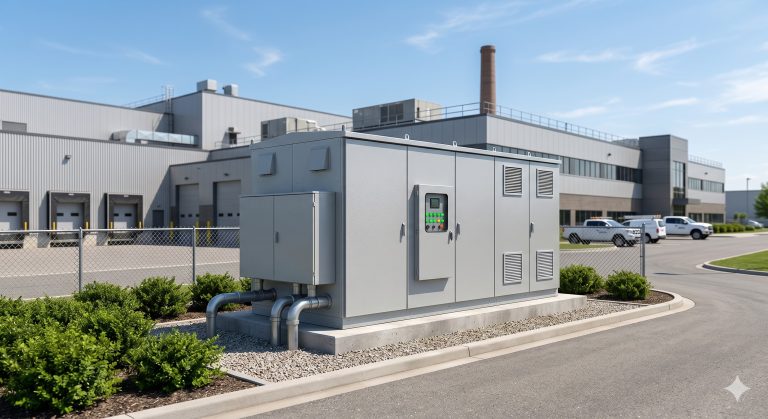
Introduction: The Industrial Energy Cost Crisis
For commercial and industrial (C&I) facility managers, the era of predictable electricity expenses is over. Industrial electricity tariffs have surged by 30-60% in major manufacturing hubs across Europe, North America, and Asia-Pacific over the past three years. Simultaneously, demand charges—the fees levied on a facility’s highest 15-minute peak kilowatt consumption—can constitute 40-60% of a factory’s total monthly utility bill. Traditional diesel backup generators address resilience but fail to mitigate these recurring operational expenses. This is where Factory Hybrid Energy Storage emerges not as a peripheral green initiative, but as a core financial instrument for industrial competitiveness.
This comprehensive analysis examines Factory Hybrid Energy Storage through the lens of Total Cost of Ownership (TCO) and return on investment (ROI). We will deconstruct the architecture, component-level metrics, and commercial mechanisms—specifically peak shaving, demand charge management, and grid support services—that transform an energy storage asset from a capital expenditure into a revenue-generating infrastructure. The objective is to provide a data-driven blueprint for C&I stakeholders evaluating MWh-scale battery energy storage systems (BESS) integrated with existing distributed generation assets.
Core Architecture & Battery Management: The Foundation of TCO Optimization
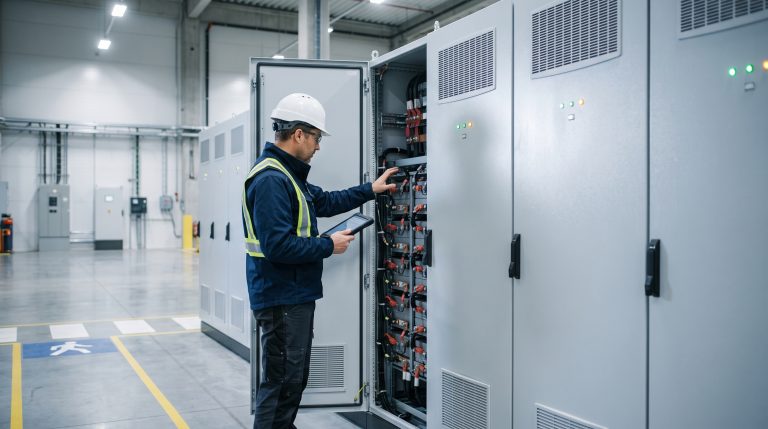
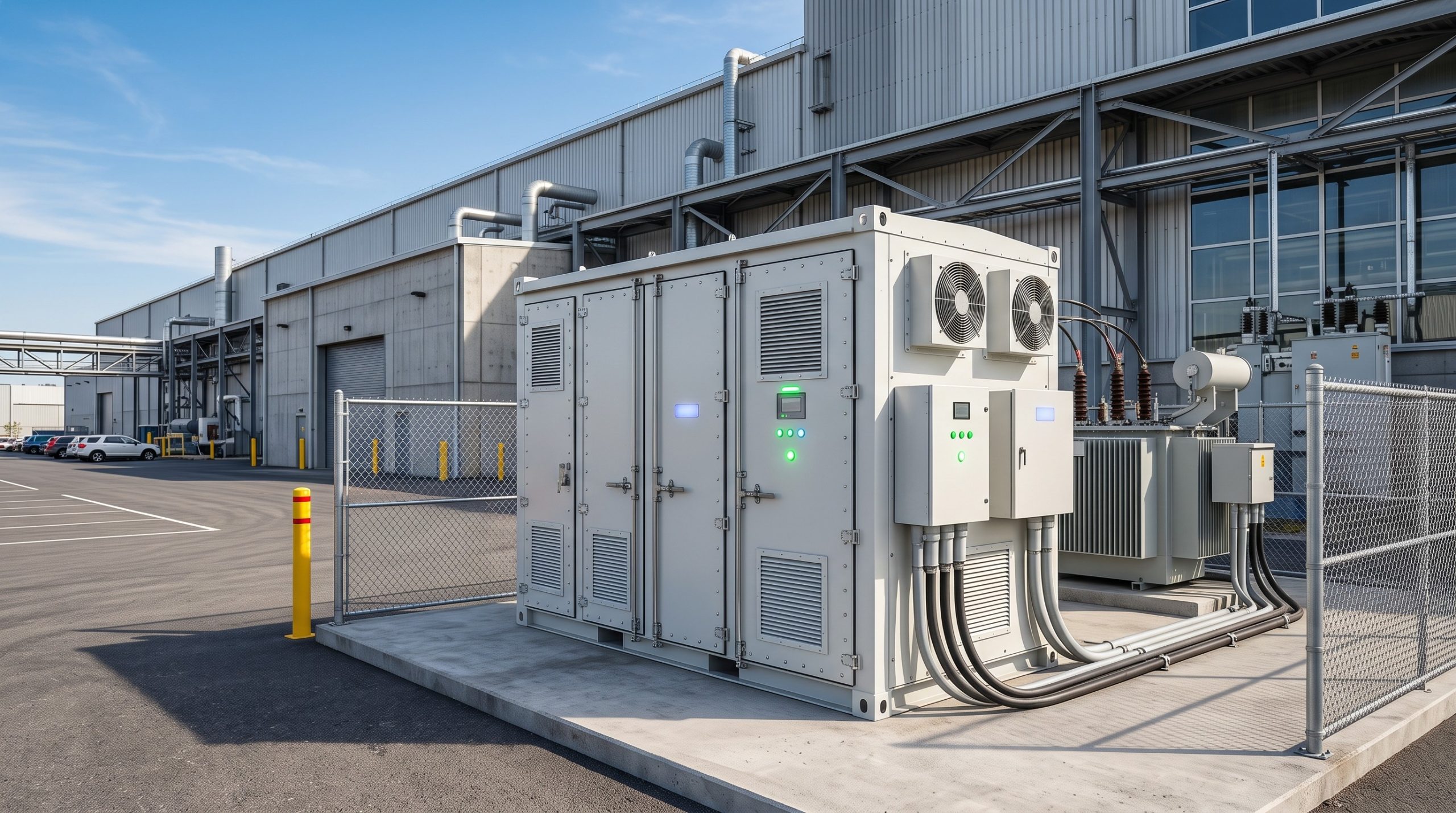
A Factory Hybrid Energy Storage system is not a monolithic battery bank. It is an integrated assembly of Tier-1 LFP cells, a bi-directional Power Conversion System (PCS), an intelligent Energy Management System (EMS), and a robust Battery Management System (BMS). The architectural decisions at this layer dictate the asset’s cycle life, round-trip efficiency, and ultimately its economic viability.
LFP Chemistry and Cycle Life Economics
The industry has decisively converged on Lithium Iron Phosphate (LFP) chemistry for stationary C&I applications. Unlike Nickel Manganese Cobalt (NMC) cells, LFP offers superior thermal stability and a significantly longer cycle life—critical for daily peak-shaving cycling. A Tier-1 LFP cell deployed in a Factory Hybrid Energy Storage system typically delivers >8,000 cycles at 90% Depth of Discharge (DoD) before reaching 80% State of Health (SOH). This translates to a calendar life exceeding 15-20 years under moderate cycling, directly amortizing the initial CapEx over a longer revenue-generating window.
Bi-Directional PCS and Round-Trip Efficiency
The Power Conversion System (PCS) is the gateway between the DC battery bus and the AC facility grid. Modern PCS units achieve round-trip efficiency (RTE) of 92-95% at nominal load. However, efficiency degrades at partial loads. Advanced Factory Hybrid Energy Storage architectures employ PCS with wide constant-efficiency bands (e.g., >90% efficiency from 20% to 100% rated power), ensuring that arbitrage and peak-shaving operations remain profitable even during low-power dispatch periods.
Liquid Cooling Thermal Management
Thermal control is the silent driver of system longevity. Air-cooled systems, while simpler, suffer from cell-to-cell temperature gradients that accelerate localized degradation. Liquid cooling maintains a temperature delta of <3°C across the battery module, reducing degradation rates by up to 20% compared to air-cooled equivalents. This precision thermal regulation enables higher continuous C-rates (0.5C to 1C) without compromising safety or cycle life—a prerequisite for aggressive peak-shaving strategies where the system must discharge fully during a 15-minute demand window.
Technical Specifications: A Reference Architecture for C&I Deployment
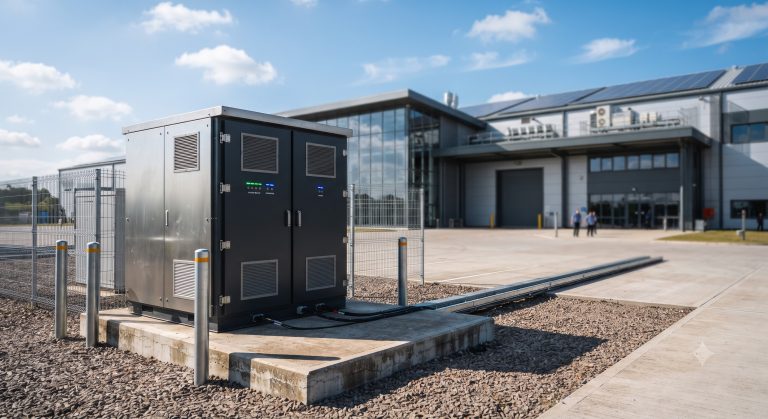
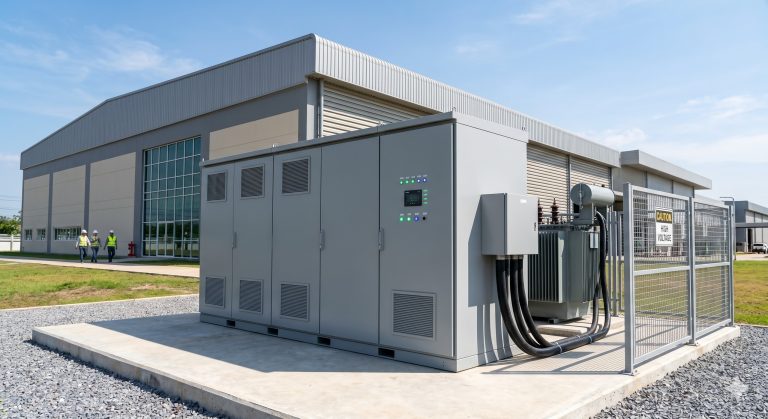
The following specification ledger represents a typical 1 MW / 2 MWh Factory Hybrid Energy Storage cabinet configuration suitable for mid-to-large industrial facilities. These parameters are illustrative and should be validated against specific project requirements and local grid codes.
| Key Parameter | Technical Specification |
|---|---|
| Battery Chemistry | Tier-1 LFP (Lithium Iron Phosphate) |
| System Capacity | 1 MW / 2 MWh (Expandable to 20 MWh) |
| Cycle Life | >8,000 cycles @ 90% DoD, 25°C |
| Round-Trip Efficiency | ≥94% at nominal load |
| Depth of Discharge (DoD) | 90% (recommended operational limit) |
| Cooling Method | Liquid Cooling, ΔT < 3°C |
| Operating Temperature | -20°C to +55°C (derated above 45°C) |
| Communication Protocols | Modbus TCP, IEC 61850, CAN 2.0B |
| Safety Standards | IEC 62619, UL 9540, UN38.3, CE |
| Ingress Protection | IP54 (outdoor cabinet) |
| Dimensions (per cabinet) | 1,200 x 1,100 x 2,200 mm (W x D x H) |
| Weight (per cabinet) | ≈2,500 kg |
Compliance with international standards is non-negotiable. The system must adhere to IEC 62619 for industrial battery safety, UL 9540 for energy storage system certification, UN38.3 for transport safety, and CE marking for European deployment. These certifications are not merely regulatory checkboxes; they are prerequisites for insurance underwriting and grid interconnection approvals, directly impacting project bankability.
Commercial ROI & Grid Support: The Financial Engine
The economic case for Factory Hybrid Energy Storage rests on three primary value streams: peak shaving, demand charge reduction, and grid support services.
Peak Shaving and Demand Charge Mitigation
Consider a factory with a peak demand of 5 MW and an average load of 3 MW. The utility’s demand charge of $15/kW-month applies to the 5 MW peak, costing $75,000 monthly. By deploying a 1 MW / 2 MWh Factory Hybrid Energy Storage system that discharges during the facility’s peak 15-minute intervals, the effective peak can be capped at 4 MW. This reduces the monthly demand charge to $60,000—a $15,000 monthly savings, or $180,000 annually. At an installed cost of approximately $400,000-$500,000 for the BESS, the simple payback period is 2.5 to 3.5 years, with a 15-year net present value (NPV) exceeding $1.5 million depending on tariff escalation.
Energy Arbitrage and Time-of-Use Optimization
In markets with pronounced Time-of-Use (TOU) tariffs, the EMS can charge the Factory Hybrid Energy Storage system during low-cost off-peak windows (e.g., $0.05/kWh) and discharge during high-cost peak windows (e.g., $0.25/kWh). With an RTE of 94%, the effective cost of stored energy is approximately $0.053/kWh—yielding a $0.197/kWh arbitrage spread. For a system cycling 300 days annually, this generates substantial additional revenue.
Demand Response and Frequency Regulation
Beyond behind-the-meter savings, Factory Hybrid Energy Storage systems equipped with advanced EMS can participate in utility demand response programs and ancillary services markets. Fast grid synchronization (<100 ms) enables the system to provide frequency regulation and voltage support, capturing incentive payments that further reduce TCO. In markets like PJM and ERCOT, these services can add $50-$100/kW-year in revenue.
Deployment Scenarios: From Industrial Parks to EV Supercharging Hubs
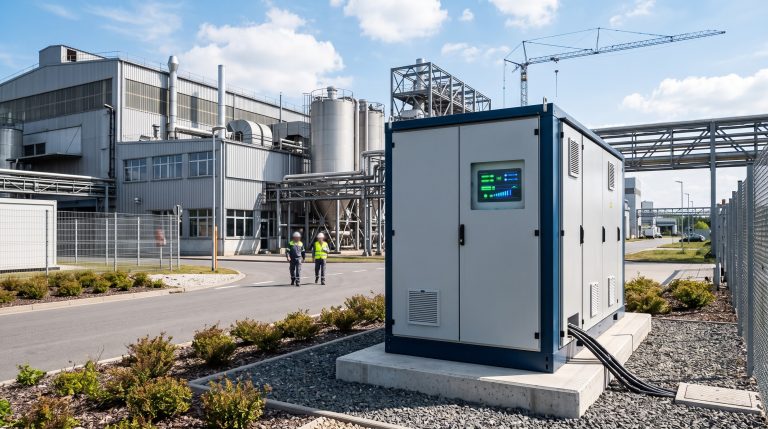
The versatility of Factory Hybrid Energy Storage enables deployment across diverse C&I environments. In industrial parks, modular cabinet architectures allow parallel expansion from 500 kWh to 20 MWh, matching growing load profiles without stranded assets. For EV supercharging stations, the integration of solar canopies with BESS creates a PV-Storage-Charging micro-grid that buffers the grid from high-power DC fast charging transients, avoiding costly transformer upgrades and demand spikes.
In data centers, the system provides UPS-grade resilience while simultaneously performing peak shaving—a dual-revenue function that conventional diesel UPS systems cannot match. For cold storage facilities, the thermal inertia of the refrigeration load can be leveraged by the EMS to pre-cool during low-cost periods, further enhancing the value proposition of the Factory Hybrid Energy Storage investment.
Conclusion: From Cost Center to Profit Center
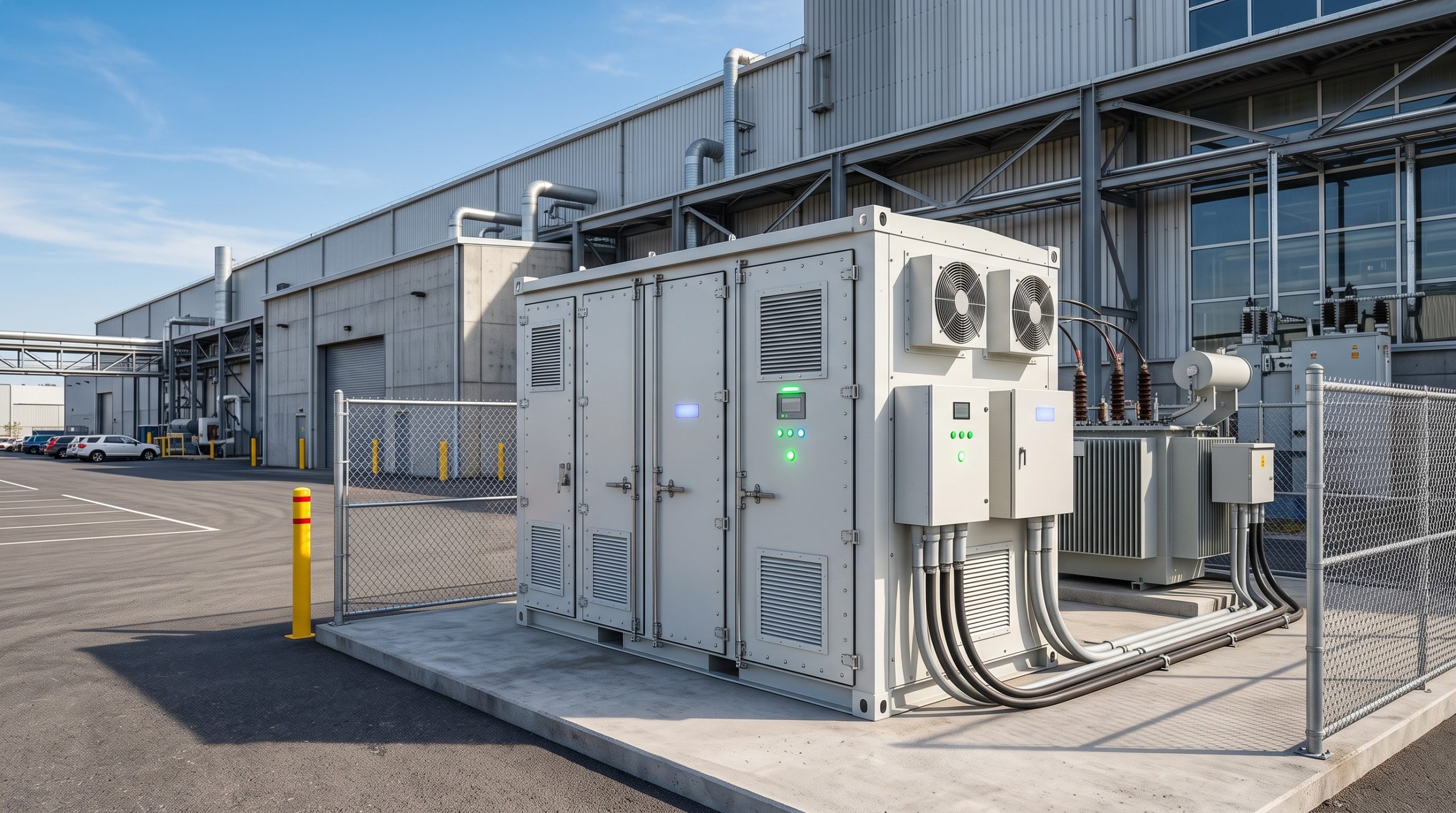
Factory Hybrid Energy Storage represents a paradigm shift in industrial energy management. By combining Tier-1 LFP chemistry, liquid-cooled thermal precision, and intelligent EMS dispatch, C&I facilities can transform their energy infrastructure from a passive operational cost into an active financial asset. The TCO analysis is compelling: a 2.5-3.5 year payback, 15-year asset life, and multiple stacked revenue streams from peak shaving, arbitrage, and grid services. As electricity volatility intensifies and decarbonization mandates tighten, the question is no longer whether to deploy Factory Hybrid Energy Storage, but how quickly it can be commissioned to capture the compounding returns of energy independence.