Introduction: The Hidden Cost of Industrial Grid Dependency
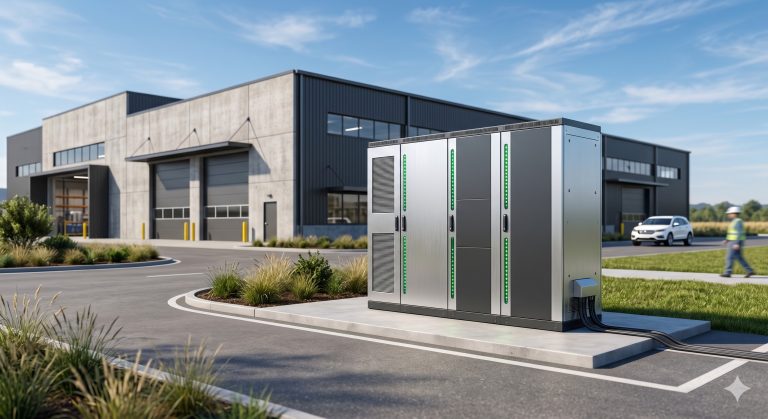
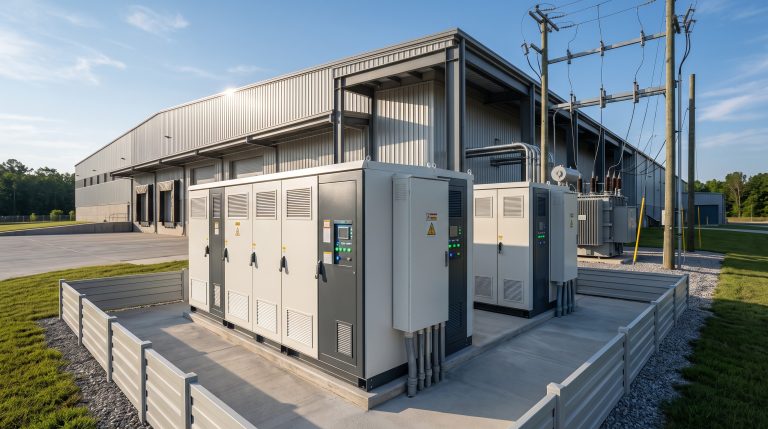
For C&I facility managers, the era of predictable electricity pricing is over. Demand charges now routinely account for 30% to 50% of a commercial electricity bill, while time-of-use (TOU) rates create punishing cost spikes during peak windows. A 1 MW industrial load facing a $25/kW demand charge incurs $25,000 per month before a single kilowatt-hour is consumed. This financial pressure is driving rapid adoption of Commercial & Industrial (C&I) Battery Energy Storage Systems (BESS) as a primary peak-shaving and demand-management asset. Unlike diesel peakers, a modern BESS delivers sub-100ms response, zero emissions, and a modular architecture that scales from 100 kWh to multi-MWh deployments. This analysis quantifies the true commercial energy storage ROI by dissecting CapEx, OpEx, round-trip efficiency, cycle degradation, and demand-response revenue streams.
The Core Architecture of a High-Yield C&I BESS
PCS, BMS, and EMS: The Triad of Dispatchable Value
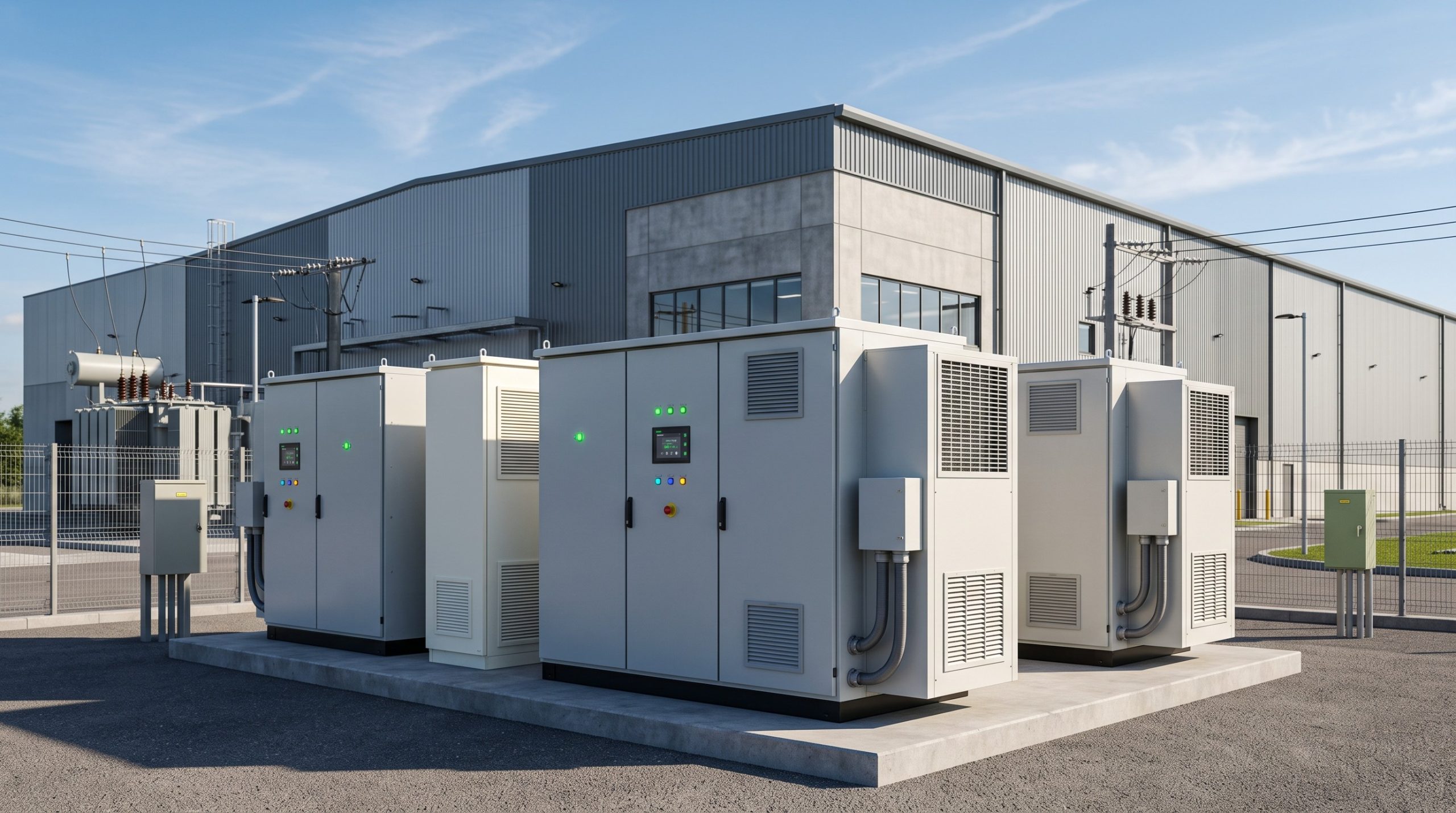
A commercial energy storage system is not a battery alone. The Power Conversion System (PCS) performs bi-directional AC/DC conversion with typical efficiencies of 97–98.5%. The Battery Management System (BMS) enforces cell-level voltage and temperature limits, executing active balancing to preserve pack uniformity. The Energy Management System (EMS) is the commercial brain: it ingests TOU tariffs, demand-charge thresholds, solar generation forecasts, and grid signals to dispatch charge/discharge commands. An EMS with predictive load-curve flattening can improve peak-shaving capture by 12–18% compared to rule-based controls.
Liquid Cooling vs. Air Cooling: Thermal Control Economics
Thermal management directly governs cycle life. Air-cooled cabinets are adequate for low-C-rate, temperate deployments but suffer cell temperature deltas of 5–8°C across a module. Liquid cooling holds deltas within 2–3°C, enabling sustained 0.5C–1C cycling without derating. For a 500 kWh system cycling twice daily, this translates to a 15–20% longer service life before 80% state-of-health (SOH) — a decisive TCO advantage. Liquid-cooled systems also reduce HVAC parasitic loads by 30–40%, lowering auxiliary OpEx.
Technical Specifications and Performance Ledger
The table below maps the engineering parameters that determine whether a quoted system achieves bankable ROI. Procurement teams should treat these as minimum acceptance criteria, not aspirational data.
| Key Parameter | Technical Specification |
|---|---|
| Battery Chemistry | Tier-1 LFP (Lithium Iron Phosphate) |
| Nominal System Capacity | 500 kWh / 1 MWh / 2 MWh (modular) |
| Cycle Life | >8,000 cycles @ 90% DoD, 25°C |
| Round-Trip Efficiency | ≥88% (DC-DC), ≥85% (AC-AC) |
| Depth of Discharge (DoD) | 90% usable |
| C-Rate (Charge/Discharge) | 0.5C / 0.5C continuous |
| Thermal Management | Liquid Cooling, ΔT ≤3°C |
| Communication Protocol | Modbus TCP, IEC 61850, CAN 2.0B |
| Safety & Compliance | UL 9540, IEC 62619, CE, UN38.3 |
| Ingress Protection | IP54 (outdoor cabinet), IP20 (indoor rack) |
| Operating Temperature | -20°C to +55°C (derated above 45°C) |
| Design Life | 10 years / 8,000 cycles to 70% SOH |
Commercial ROI Modeling: CapEx, OpEx, and Peak-Shaving Yield
CapEx Breakdown and LCOE Benchmarks
Turnkey C&I BESS CapEx currently ranges from $280 to $420 per kWh for liquid-cooled, UL 9540-listed systems at 500 kWh–2 MWh scale. The battery pack represents 50–55% of cost, PCS 15–18%, EMS 8–10%, thermal management 6–8%, and balance-of-system plus installation the remainder. Levelized Cost of Storage (LCOS) for peak shaving typically lands between $0.09 and $0.14 per kWh discharged over a 10-year horizon, assuming 6,000–8,000 cycles and 88% round-trip efficiency.
Demand Charge Mitigation: The Primary ROI Engine
A 500 kWh / 250 kW BESS deployed at a facility with a $20/kW demand charge can shave 250 kW from the monthly peak. Annual demand-charge savings reach $60,000. If TOU arbitrage adds $0.04/kWh spread across 300 effective cycles, incremental revenue is $6,000/year. Demand response programs (e.g., PJM, ERCOT, or CAISO) can contribute $15,000–$40,000 per MW-year in capacity and frequency-regulation payments. Combined, simple payback periods of 4.5 to 6.5 years are achievable in high-tariff markets.
Round-Trip Efficiency and Degradation Drag
Every efficiency loss compounds. A system with 85% round-trip efficiency versus 90% loses an additional 5% of arbitrage value annually. Similarly, a battery limited to 80% Depth of Discharge (DoD) delivers 20% less usable capacity per cycle than a 90% DoD design. Tier-1 LFP cells rated >8,000 cycles at 90% DoD, paired with active balancing BMS, preserve >70% capacity after 10 years — the threshold for economic viability.
Deployment Scenarios: From Industrial Parks to EV Supercharging
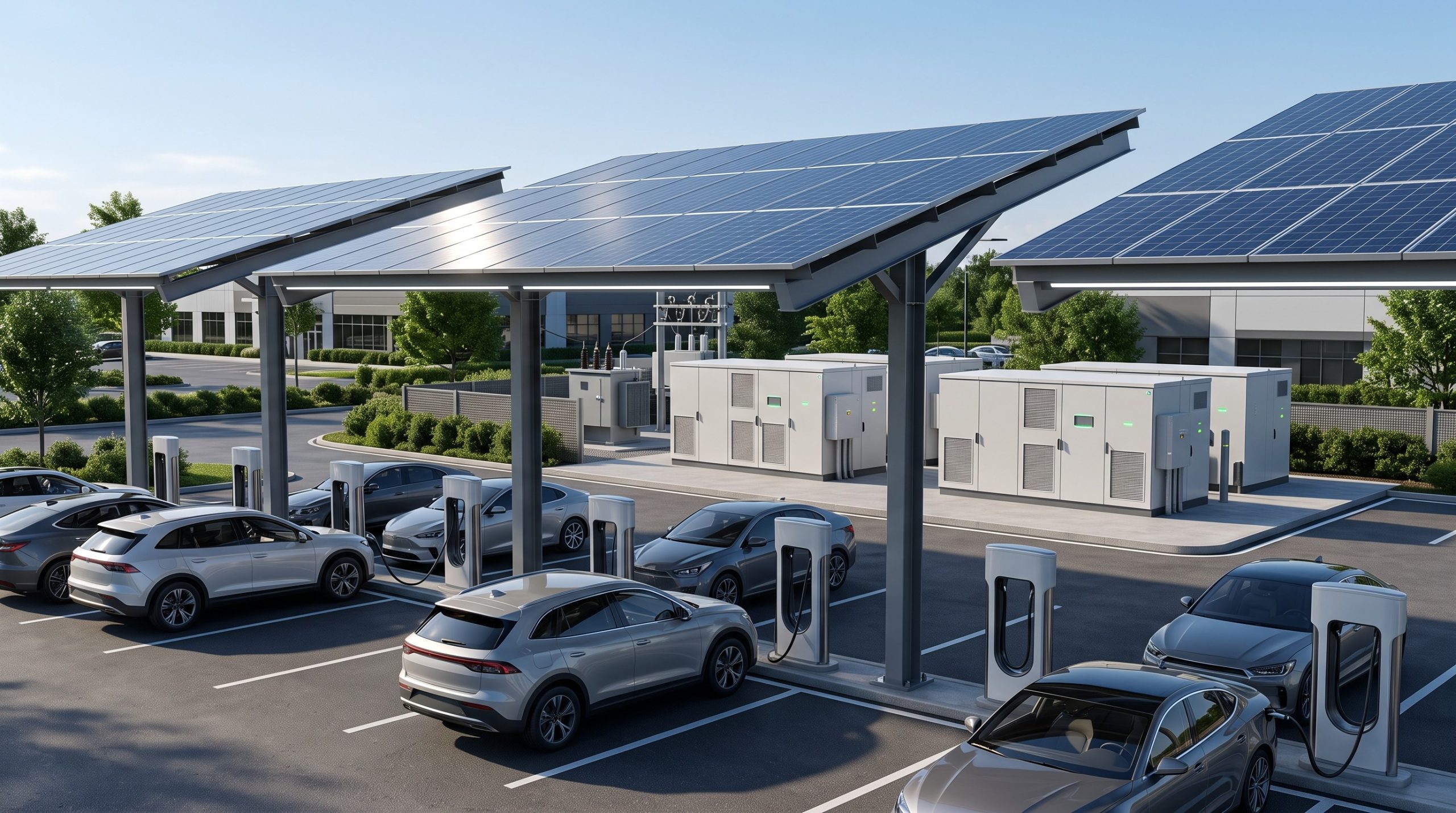
The highest-ROI deployments cluster where grid constraints, demand charges, and renewable generation intersect. Industrial parks with welding, stamping, or injection-molding loads benefit from peak shaving and power-factor correction. Cold-storage warehouses use BESS to ride through compressor inrush and avoid demand spikes. EV supercharging stations pair 200–500 kWh BESS with solar canopies to buffer 350 kW charger bursts, avoiding costly service upgrades and capturing TOU arbitrage. In all cases, the EMS must support seamless grid-to-island transition and comply with UL 9540, IEC 62619, CE, and UN38.3 for transport and deployment.
Conclusion: Underwriting ROI with Engineering Discipline
Commercial energy storage ROI is not a marketing claim — it is an engineering outcome. Facilities that specify liquid-cooled, Tier-1 LFP systems with >8,000 cycle life, 90% DoD, and >88% round-trip efficiency, governed by a predictive EMS, consistently achieve payback under six years. As demand charges rise and grid volatility increases, BESS shifts from a discretionary efficiency project to a core resilience asset. Procurement teams should demand verified cycle-life test data, UL 9540 certification, and a performance guarantee tied to SOH — not just nameplate capacity.