Overview
This comprehensive FAQ addresses the most critical technical and financial questions facing B2B buyers of Battery Energy Storage Systems (BESS), from Total Cost of Ownership (TCO) calculations to lifecycle performance guarantees. As the industry shifts towards Levelized Cost of Energy (LCOE) as the primary metric for value, understanding the interplay between cell degradation, thermal management, and power conversion efficiency is paramount for securing long-term ROI.

Frequently Asked Questions
- Q1: What is the real-world cycle life of a Tier-1 LFP BESS at 80% DoD, and how is it guaranteed?
- The standard cycle life for a Tier-1 LFP-based BESS is 6,000 to 8,000 cycles at 80% Depth of Discharge (DoD) before reaching 60% State of Health (SOH). This is typically backed by a 10-year performance warranty that guarantees a minimum of 70% capacity retention under standard operating conditions. However, real-world performance is heavily influenced by average cell temperature; every 10°C reduction in operating temperature can nearly double the cycle life, which is why advanced liquid cooling is critical.
- Q2: How do you calculate the true Levelized Cost of Storage (LCOE) for a 5MWh industrial system?
- LCOE is calculated by dividing the total lifecycle cost (CAPEX + OPEX + replacement costs + charging electricity) by the total lifetime energy throughput (MWh discharged). For example, a 5MWh system with a total installed cost of $1,200/kWh, an 88% round-trip efficiency, and 7,000 cycles yields an LCOE of approximately $0.06-$0.08/kWh. This financial model is crucial for peak shaving arbitrage, where the delta between peak and off-peak electricity prices must exceed this LCOE threshold to achieve a positive ROI within the first 5 years.
- Q3: How does liquid cooling compare to air cooling for preventing thermal runaway and extending cell life?
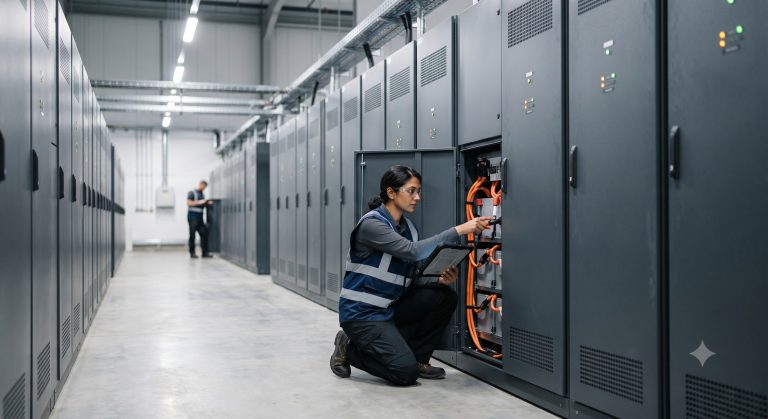
- Liquid cooling is unequivocally superior for large-scale BESS, offering up to 30% better thermal regulation and a far lower risk of thermal runaway. Unlike air cooling, which struggles with temperature gradients across densely packed cells, liquid cooling maintains cell temperature variance within ±2°C, preventing localized hot spots that accelerate aging and trigger cascading failures. This system integrates with the BMS to provide active cell balancing, ensuring that no single cell experiences extreme temperatures that could lead to gas venting or internal short circuits.
- Q4: What are the specific fire safety and gas detection protocols for a UL 9540A-compliant BESS?
- A UL 9540A-compliant BESS employs a multi-tiered fire safety strategy including early gas detection (H2, CO, VOC), aerosol or clean agent fire suppression, and explosion venting panels. The critical first line of defense is the BMS, which monitors for cell voltage anomalies and internal resistance changes that precede thermal events. If critical thresholds are breached, the system automatically disconnects the PCS, activates the suppression system, and isolates the affected cabinet, preventing propagation to adjacent modules.
- Q5: Can the BESS support grid-tied peak shaving and seamless off-grid islanding simultaneously?
- Yes, advanced bi-directional PCS units with grid-forming capabilities support both peak shaving (grid-tied) and seamless off-grid islanding. The system continuously synchronizes with the grid frequency (50/60Hz) for peak shaving, but upon grid failure, the PCS switches to grid-forming mode (V/f control) within 15 milliseconds, acting as a virtual synchronous generator (VSG) to power critical loads without interruption. This capability requires precise EMS programming and is essential for industrial facilities requiring backup power.
- Q6: What is the role of the BMS in monitoring inter-cell balancing and preventing over-discharge?
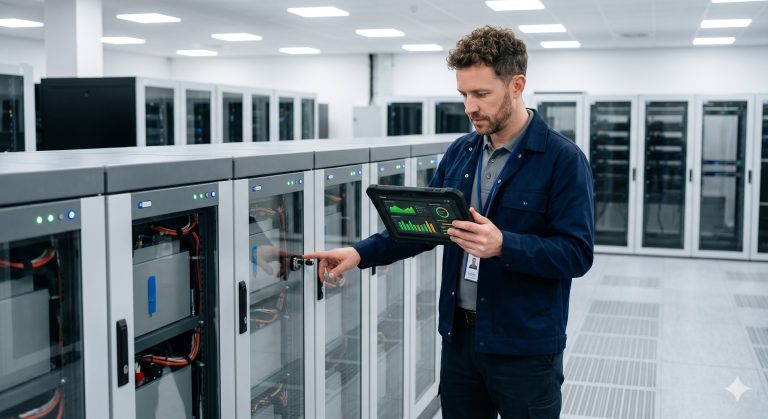
- The BMS continuously monitors every individual cell’s voltage and temperature, performing passive or active balancing to ensure all cells in the string maintain equal State of Charge (SOC). Active balancing redistributes energy between cells during charging and discharging, preventing weak cells from causing premature system shut-down or over-discharge. The BMS also calculates the State of Health (SOH) based on internal resistance trends, alerting maintenance teams to cells that need replacement before they impact total system capacity.
- Q7: How does a local Energy Management System (EMS) optimize demand response and ROI?
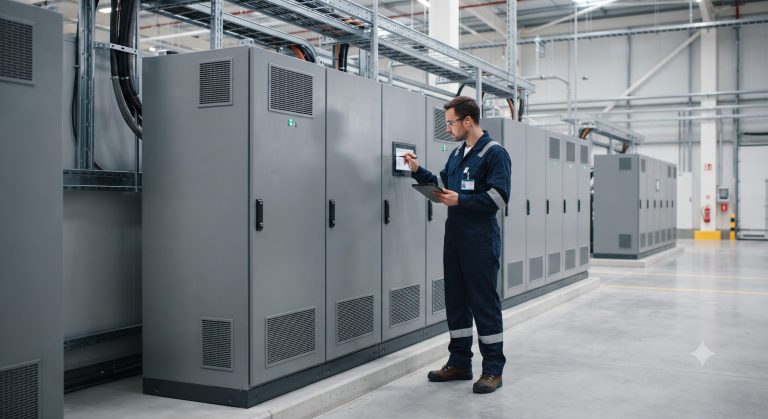
- An on-premise EMS utilizes predictive algorithms and real-time analytics to execute optimal dispatch strategies based on dynamic electricity tariffs, site load profiles, and weather forecasts. For demand response, the EMS automatically discharges stored energy during peak price windows (peak shaving) and charges during off-peak periods, maximizing arbitrage revenue. Furthermore, it can participate in frequency regulation markets by responding to grid signals (e.g., via Modbus or IEC 61850) to inject or absorb active power in milliseconds, generating additional revenue streams that shorten the payback period.
- Q8: What is the scalability process for upgrading from a 1MWh to a 5MWh system?
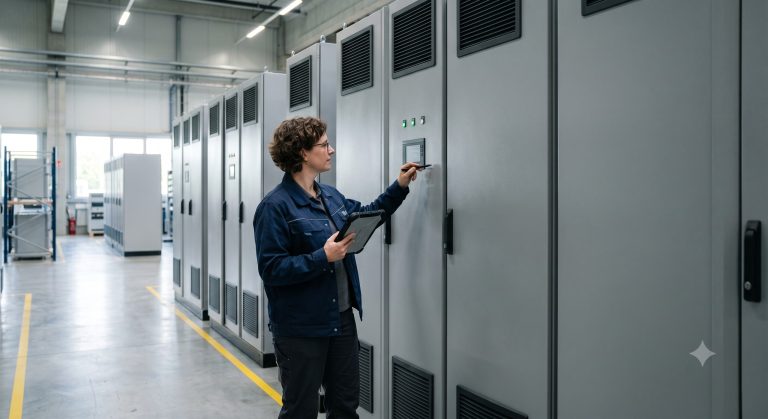
- Scalability is achieved through parallel cabinet connectivity, allowing you to link multiple battery cabinets to a common AC busbar or DC busbar. Each cabinet houses its own BMS and cooling system, and they communicate via a master-slave architecture controlled by the central EMS. Upgrading simply involves adding new cabinets to the busbar and updating the EMS parameters; the system is designed to handle modular expansion without requiring a full re-engineering of the existing power conversion or control infrastructure.