UTILITY-SCALE BESS COMMISSIONING HANDBOOK
OFFICIAL COMMERCIAL BESS TECHNICAL OVERVIEW & DATASHEET
EXECUTIVE SUMMARY
This comprehensive handbook serves as the definitive technical reference for the commissioning of utility-scale Battery Energy Storage Systems (BESS). Designed for project developers, EPC contractors, and system integrators, this document details the engineering protocols, safety verification procedures, and performance validation matrices essential for successful project handover. Our Tier-1 LFP-based storage platform delivers unparalleled grid stability, renewable firming, and energy arbitrage capabilities, backed by a rigorous commissioning framework that ensures operational excellence from the first cycle. This handbook consolidates over 200 individual test points into a streamlined, risk-mitigated process, reducing commissioning timelines by up to 30% while guaranteeing full compliance with global grid codes.
SYSTEM ARCHITECTURE & SAFETY
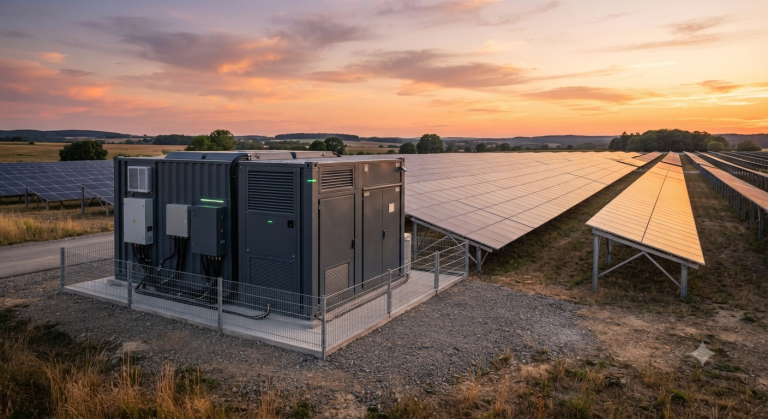
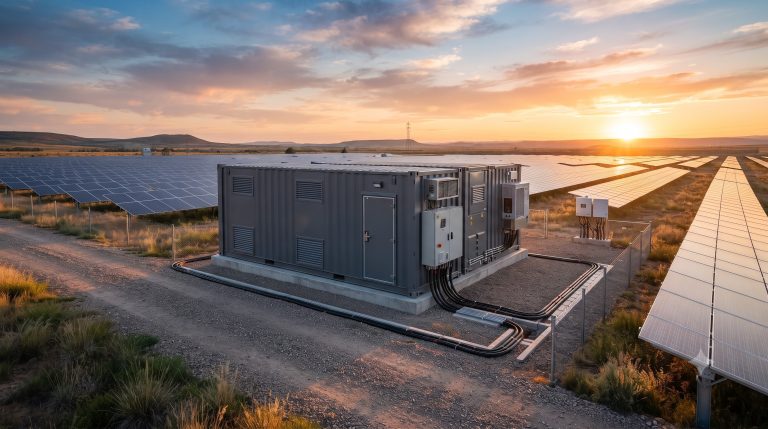
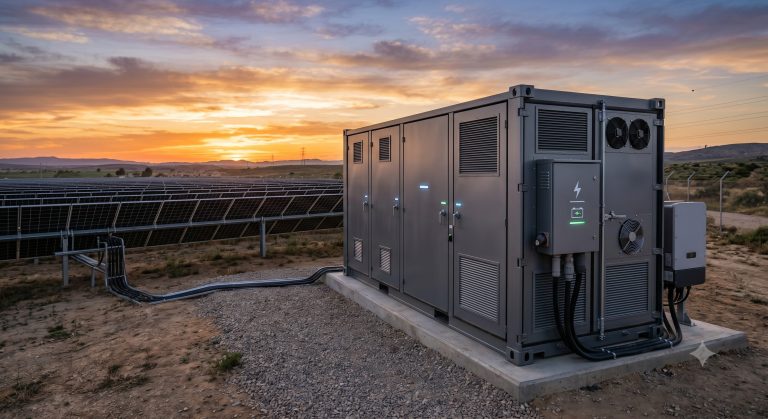
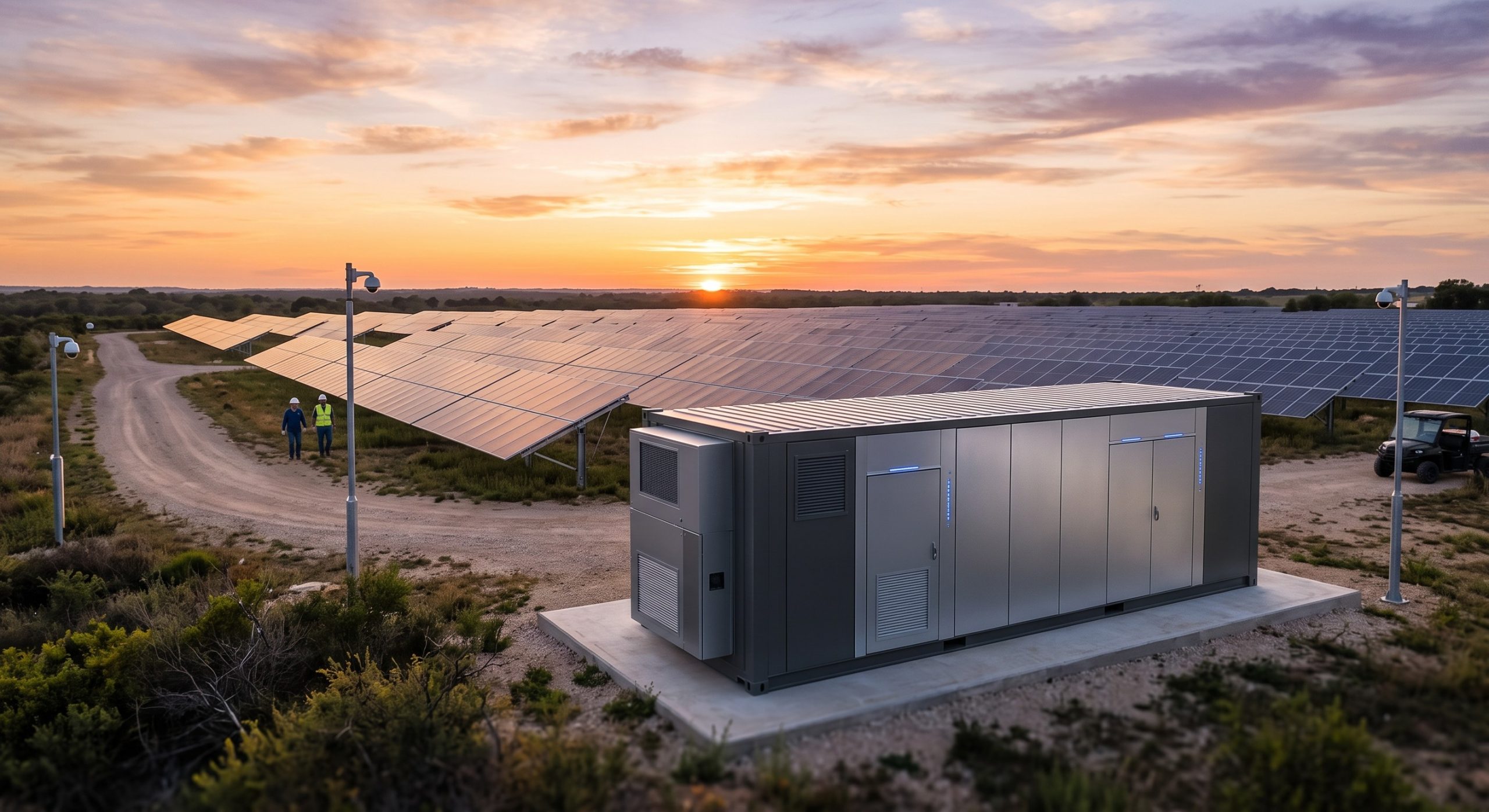
The utility-scale BESS platform is architected around a modular, containerized design philosophy that prioritizes both performance and personnel safety. The system integrates high-density LFP battery racks, a bi-directional Power Conversion System (PCS), a proprietary Battery Management System (BMS), and a site-level Energy Management System (EMS) communicating over a high-speed industrial Ethernet backbone. The architecture supports both AC and DC coupling configurations, providing flexibility for greenfield solar PV integration or standalone grid services.
Safety is embedded at every level of the system design. The multi-layered protection strategy encompasses:
– Cell-Level Protection: Individual cell voltage and temperature monitoring with passive and active balancing.
– Module-Level Protection: Integrated fusing and isolation contactors within each battery module.
– Rack-Level Protection: Dedicated Battery Control Units (BCUs) managing high-voltage DC disconnects and pre-charge circuits.
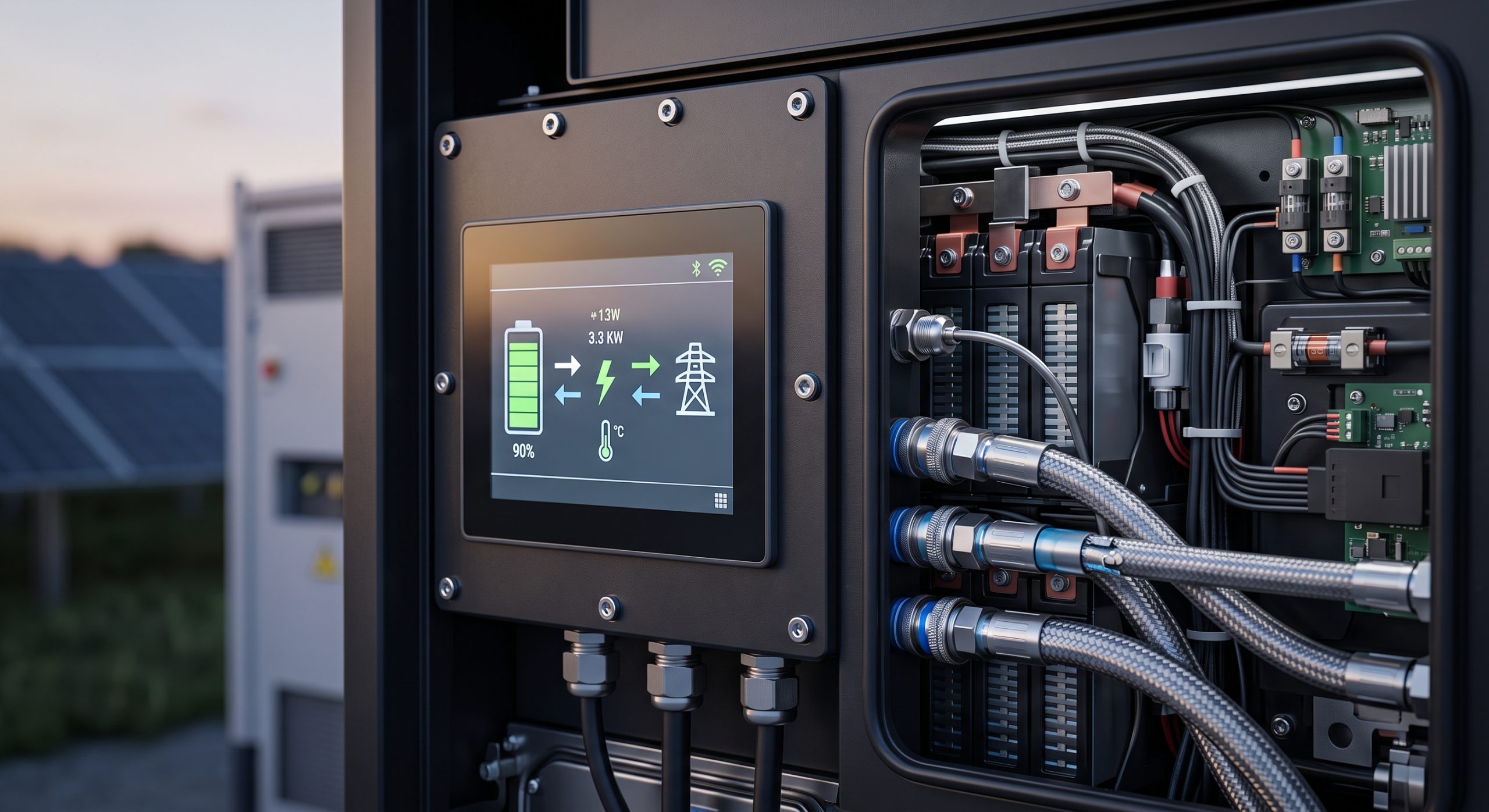
– Container-Level Protection: Comprehensive gas detection (H2, CO, VOC), aerosol-based fire suppression, and a dedicated HVAC system maintaining optimal operating temperatures.
– Site-Level Protection: Emergency stop (E-Stop) pushbuttons, isolation transformers, and ground fault detection devices.
KEY FEATURES
– Feature 1: Advanced Liquid Cooling Thermal Management: Maintains cell temperature variance within ±2°C across all racks, maximizing cycle life by up to 15% and ensuring stable output under 1C continuous charge/discharge rates.
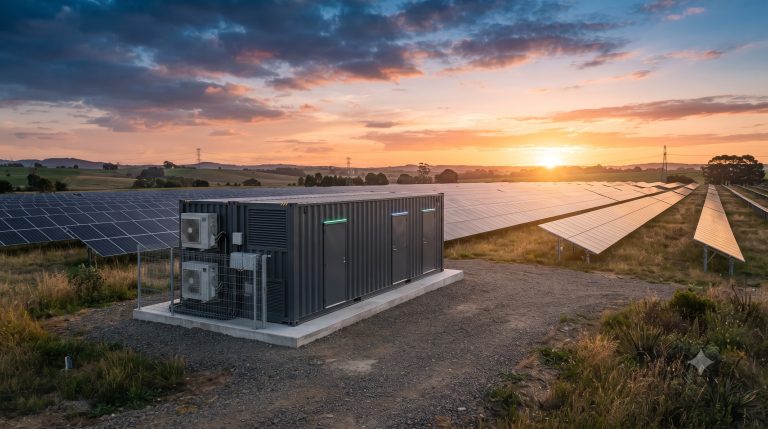
– Feature 2: Plug-and-Play Modular Scalability: Standardized 20-foot and 40-foot ISO container designs allow for rapid, parallel expansion from 5 MWh to over 100 MWh per interconnection point, simplifying future capacity upgrades.
– Feature 3: Smart EMS with Grid-Forming Capability: Proprietary EMS software provides black-start functionality, seamless islanding transition, and advanced power dispatch algorithms for frequency regulation, voltage support, and ramp-rate control.
– Feature 4: Comprehensive Cyber-Security Framework: Built-in security features include role-based access control, encrypted communication (IEC 61850, DNP3), and network intrusion detection to protect against evolving cyber threats.
COMPLIANCE & STANDARDS
The BESS platform is designed and certified to meet the most stringent international standards, ensuring seamless grid interconnection and insurability. The compliance register includes:
– UL 9540 (Energy Storage Systems and Equipment) and UL 9540A (Thermal Runaway Fire Propagation Testing).
– IEC 62619 (Safety requirements for secondary lithium cells and batteries).
– IEC 62477 (Safety requirements for power electronic converter systems).
– IEEE 1547 (Standard for Interconnection and Interoperability of Distributed Energy Resources).
– NFPA 855 (Standard for the Installation of Stationary Energy Storage Systems).
– Compliance with regional grid codes including those of North America, Europe, Australia, and the Middle East.
TECHNICAL SPECIFICATIONS
– Nominal Energy Capacity: 5.0 MWh per standard 20-ft container (expandable).
– Usable Energy Capacity (DOD 90%): 4.5 MWh.
– System Voltage Range: 1000 Vdc (nominal) / 1500 Vdc (high-voltage option).
– AC Output Voltage: 480 Vac / 600 Vac / 690 Vac (selectable via transformer).
– Continuous Power Rating: 2.5 MW AC (1C rating) / 5.0 MW AC (0.5C rating).
– Peak Power Rating (10 seconds): 3.0 MW AC.
– Round-Trip Efficiency: > 88% (at 1C rate, 25°C ambient).
– Operating Temperature Range: -30°C to +50°C (with power derating above 40°C).
– Cooling Method: Smart liquid cooling with anti-freeze coolant (ethylene glycol/water mix).
– Enclosure Rating: IP54 (container) / IP65 (power electronics).
– Communication Protocols: Modbus TCP, IEC 61850, DNP3.
| Parameter | Specification |
|---|---|
| Nominal Capacity (per 20-ft container) | 5.0 MWh (expandable to 100+ MWh) |
| Cooling Method | Smart Liquid Cooling (Ethylene Glycol/Water) |
| Cell Chemistry | Tier-1 LFP (Lithium Iron Phosphate) |
| Round-Trip Efficiency | > 88% @ 1C rate |
| Operating Temperature Range | -30°C to +50°C |
| Safety Standards | UL 9540, UL 9540A, IEC 62619, NFPA 855 |
INDUSTRIAL DEPLOYMENT
Successful deployment of the utility-scale BESS demands meticulous preparation and adherence to the commissioning handbook. The process is segmented into four critical phases: Pre-Installation Site Readiness, Mechanical & Electrical Installation, Pre-Commissioning and Safety Verification, and Final System Commissioning and Performance Testing.
Pre-Installation Site Readiness: This phase involves verifying civil works, foundation strength, grounding resistance (< 5Ω), and the readiness of AC/DC interconnection conduits.
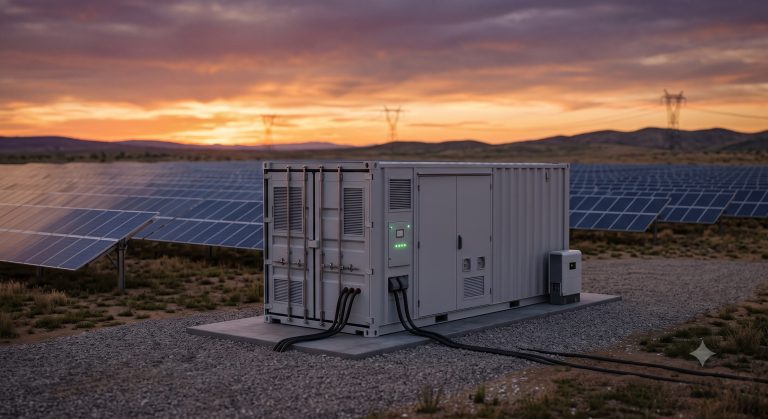
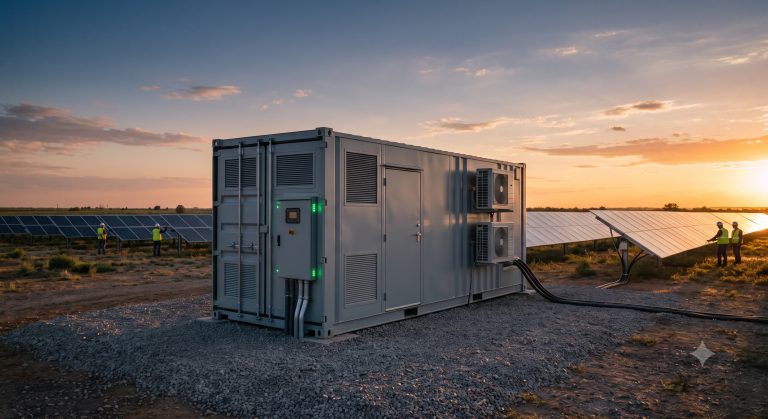
Mechanical & Electrical Installation: This covers the container positioning, anchoring, HV/MV cabling, auxiliary power hookups, fiber optic network backbone installation, and coolant filling and circulation verification.
Pre-Commissioning and Safety Verification: All safety interlocks, insulation resistance, contactor operation, and BMS communication are validated. The thermal management system is tested across full ambient temperature extremes.
Final System Commissioning and Performance Testing: This involves battery bank float charging, capacity verification through a full charge/discharge cycle, PCS grid synchronization, power ramp tests, and a 72-hour continuous reliability run under simulated grid commands.
📥 Download Technical Specification
Click the button below to view or download the full official PDF datasheet.